



Valve Loosens AMD's Handheld Grip As SteamOS Gains Intel GPU Support


We say "some" support because the users in the Reddit thread are reporting very mixed results on Arc B580 cards. The original poster notes that while some games, like Cyberpunk 2077 and Spider-Man Remastered, are running well, in other titles he's getting about half of the performance he would expect while running SteamOS, and other gamers in the thread have reported similar results. A couple of other users offer helpful hints, including to use a modified version of Proton as well as waiting for SteamOS to move to the latest Linux kernel.
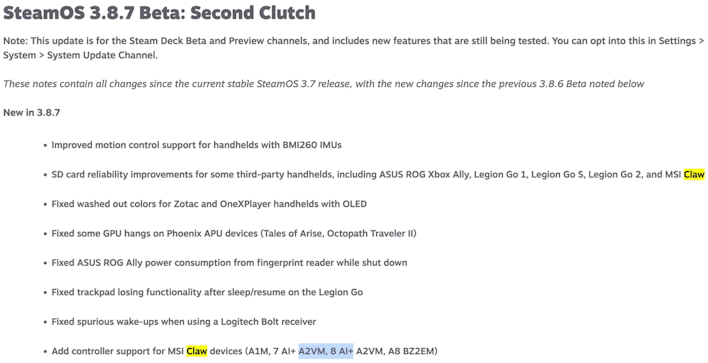
Indeed, the Intel Xe driver has been one of the busiest areas of kernel development recently. The latest SteamOS beta, 3.8.7, is based on Linux 6.16, but the 6.17 kernel should bring along further improvements for Intel graphics, including continued work on Battlemage support, virtualization features, and refinements to variable refresh rate handling. Recent kernel releases have also added support for Shared Virtual Memory (SVM), improved telemetry and monitoring capabilities, expanded DisplayPort functionality, and numerous fixes aimed at improving stability and performance on Intel's newer Arc and integrated Xe graphics architectures.
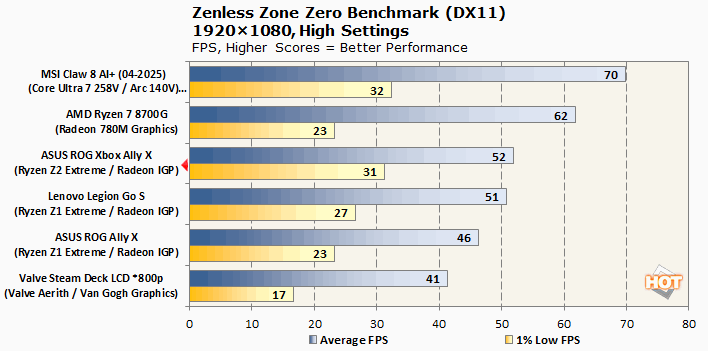
Given how quickly Intel's Linux graphics stack is evolving, some growing pains on SteamOS are probably to be expected. YouTuber ETA PRIME, who specializes in integrated graphics gaming, reports findings along the same lines as the Redditors above after putting SteamOS 3.8.7 Beta on the MSI Claw 8 AI+, the same model we reviewed early last year. That machine is based on an Intel Core Ultra 7 258V, and we were very impressed over a year ago; things have continued to improve for the handheld, at least on Windows.
As ETA PRIME shows, SteamOS support on the handheld isn't quite fully baked yet. The system's left-hand menu button fails to open the Steam interface, and because SteamOS cannot natively control the Intel chip's power targets yet, users must rely on third-party plugins like Simple Decky TDP to manually manage wattage and toggle turbo boost. In gaming, he found inconsistent overall performance due in part to wonky power management, and some games, like The Witcher 3, ran much worse than on Windows.
Even still, it's early days for Intel support on SteamOS, and we've no doubt that things will improve rapidly. When the Intel Arc A770 launched less than four years ago, the drivers themselves were remarkably buggy and many games had issues. Now, Intel's graphics drivers on Windows are rock-solid, and even older games run well. The company's progress has been remarkably rapid, and if it can pull that off in Linux, too, then we might just see an Arc G3 handheld running SteamOS smoothly before the year's out.





