



Trump Admin Prepares Massive Ban On Chinese Data Center Tech


Seemingly as part of renewed banning spree, the Trump administration is drafting a new federal policy to halt imports of Chinese-made data center components, escalating Washington’s intent on walling off the physical infrastructure powering the American AI boom from foreign security threats.
According to sources familiar with the draft policy, the proposed measure, expected to be issued through the Federal Communications Commission or the Commerce Department later this year, targets key networking equipment, servers, storage arrays, and, of mention, optical transceivers. The latter serves as vital for data centers as it transmits vast streams of data across server racks at high speeds. Federal regulators maintain that relying on Chinese suppliers for these internal hardware components creates severe supply chain vulnerabilities, exposing critical American systems to potential hardware backdoors, malware, and unauthorized remote access.
This announcement is the latest salvo in a fast-widening campaign to strip foreign components from America’s digital industry, following a regulatory ban last week targeting imports of new Chinese humanoid robots and grid-connected power inverters.
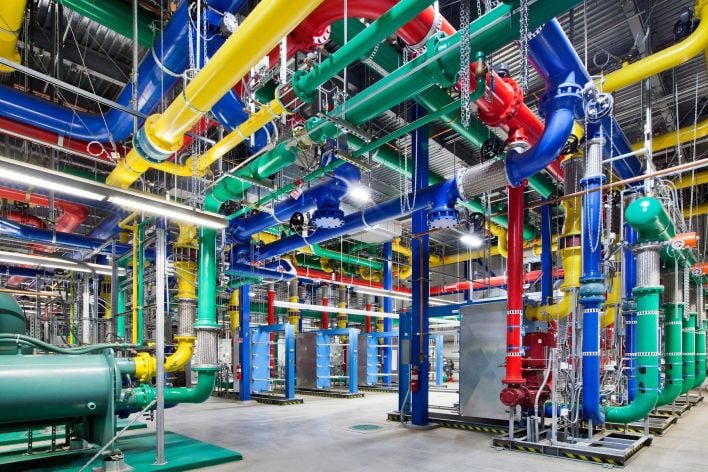
However, enforcing a hard separation like this can pose significant practical challenges for major cloud operators, including Amazon Web Services, Microsoft Azure, and Google Cloud. Experts warn that barring lower-cost Chinese devices will inevitably drive up capital expenditures, lengthen procurement lead times, and potentially slow down data center buildouts. Smaller cloud providers with less bargaining power are particularly vulnerable to these cost spikes, leaving them to choose between stalled expansion plans and elevated hardware overhead.
Beijing has already responded in firm opposition, calling on Washington to cease the politicization of technology trade while promising necessary countermeasures to protect its domestic industries. Following the earlier U.S. ban on Chinese robotics, Chinese officials pointedly raised the prospect of restricting exports of rare-earth minerals essential for Western electronics manufacturing.
Main image: AWS data center (Credit: Wikimedia Commons)





