



Trump Phone Gets Major Redesign With New Specs, Drops Made In USA Claims


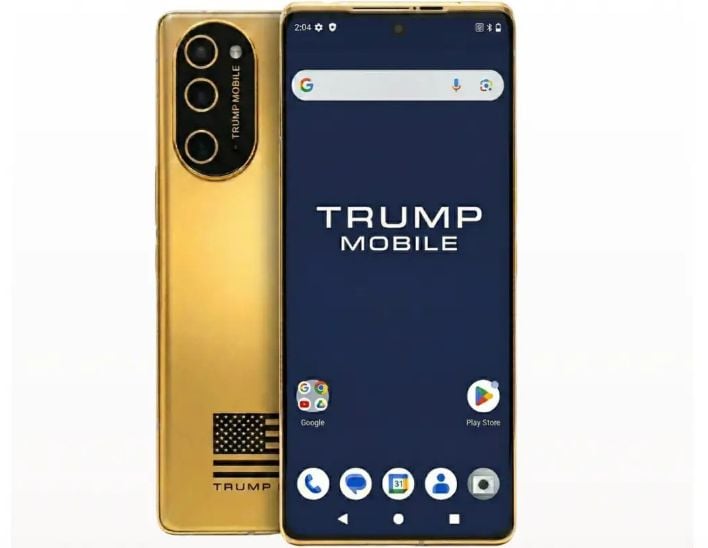
The revised T1, which markets itself as a bold departure from the tyranny of the Apple and Samsung duopoly, isn't just a piece of hardware; it’s a political statement you can carry in your pocket. While most manufacturers obsess over power, megapixels, and displays, the Trump Phone focuses on a different spec: freedom. Along with that, the latest iteration of the Trump Phone rearranges its triple camera array vertically (used to be in a triangle) and has a new gold backplate resembling a cheap case you'd find at a, ahem, Chinese night market or Temu.
As for the rest of the device, it sports a 6.78-iinch AMOLED with 120Hz refresh rate, 5,000mAh battery (with 30W quick charge), said triple camera setup consisting of a 50MP primary, 8MP wide angle, 50MP telephoto, plus a 50MP selfie. Running the show is an unspecified Snapdragon 7 chipset over Android 15. Critics have been quick to point out that the underlying hardware likely mirrors mid-range international models, but for the target demographic, the provenance of the processor matters far less than the logo on the chassis.
The rollout has not been without its quirks. The redesigned website features bold graphics and marketing spiel that treat the act of switching cellular providers as a revolutionary act. More crucially, at the time of this writing, Trump Mobile is still taking $100 preorders for the T1 ($500 full price), but the phone is listed as coming later this year. How many more times will the debut phone be delayed? Who knows.
As for the original "Made in America" narrative, that has also taken a significant shift. The initial ambitious claims of domestic production have been replaced by more cautious language, describing the phone as being "designed with American values in mind" with "American teams helping guide design and quality."
Looking at the phone strictly as a low-mid-range product, its success will heavily hinge on the quality control of the hardware, as well as the reliability of security patches and updates. That is, assuming it gets into consumers hands in due time in the first place.





