



SK Hynix Fires Back In The AI Memory Race With Next Gen 48GB HBM4E


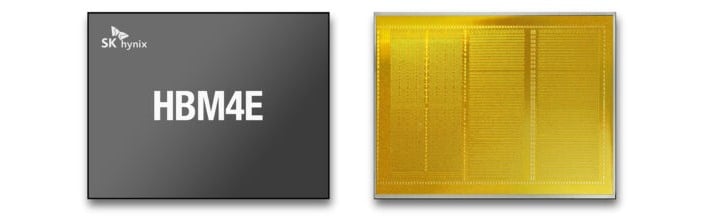
Stacking twelve high-speed memory dies inherently introduces severe thermal and power constraints. To maintain structural stability and prevent heat-induced throttling during sustained workloads, SK hynix has utilized its proprietary "Advanced Mass Reflow Molded Underfill" packaging technique, or "MR-MUF." This process, which injects and cures a liquid protective material between the stacked chips, reportedly cuts thermal resistance by 17% compared to standard HBM4 iterations. Furthermore, the company states that this new memory generation improves overall power efficiency by about 20%, a critical metric for datacenter operators trying to balance massive AI training clusters against very finite power grids.
The timing of this announcement highlights the immense pressure within the memory oligopoly. Originally anticipated for later in the year, SK hynix has noticeably pulled its sampling timeline forward to mid-June. This aggressive scheduling very likely a competitive maneuver designed to counter rival Samsung, which announced its own 12-layer HBM4E samples just a few weeks ago. As the current leader in high-bandwidth memory market share and a primary supplier for hardware giants like NVIDIA, SK hynix is moving swiftly to maintain its technological and commercial momentum.

Moving forward, these memory stacks will enter a rigorous qualification phase. Technology companies developing AI accelerators for the 2027 cycle will stress-test the SK hynix samples to verify signal integrity, thermal reliability, and manufacturing yield at scale. The outcome of these extensive evaluations will ultimately dictate how multi-billion-dollar supply contracts are awarded in the next phase of the artificial intelligence hardware rollout. Of course, as an enthusiast and gamer, I'd rather see these chips make their way into consumer graphics cards, but we'll need big shifts in the market for that to happen.





