


Samsung, Micron, SK Hynix Can't Shake DRAM Antitrust Suit Over 500% Price Hike


The lawsuit, Garciaguirre et al. v. Samsung Electronics Co., was filed in June 2026 by 17 consumers and small businesses from five states. Plaintiffs allege that the three manufacturers have maintained an ongoing agreement to restrict DRAM supply since October 2022, using a combination of production cuts, manufacturing capacity reallocations, and coordinated exits from older memory product lines.
The complaint points to the extraordinary increase in memory prices as evidence of the alleged scheme. As we've reported before (and as regular HotHardware readers are no doubt well aware), retail DRAM prices increased approximately 500% between early October 2025 and June 2026. Contract prices reportedly climbed by approximately 50% in Q4 2025, 93% in Q1 2026, and another 58% in Q2. Plaintiffs calculate that conventional DRAM prices increased by approximately 697% over an 18-month period.
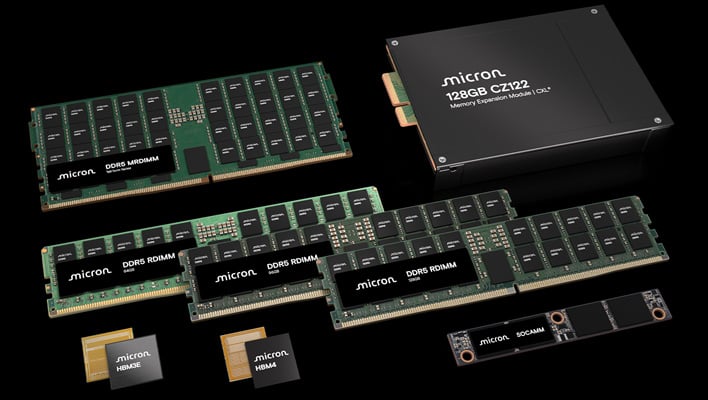
Among the alleged evidence of coordination are production cuts announced by SK hynix and Micron in late 2022, followed by Samsung in April 2023. The manufacturers subsequently redirected substantial manufacturing capacity toward High Bandwidth Memory (HBM), the specialized memory used in AI accelerators, while announcing plans to discontinue mainstream DDR4 production during 2025.
Perhaps the most notable evidence is that all three manufacturers allegedly introduced unusually similar customer-vetting procedures in January 2026, asking customers about end-user identities, order quantities, and whether reported demand was genuine. The judge also considered this particularly significant, finding that the simultaneous adoption of substantially identical procedures was difficult to explain in the absence of coordination.
In her November 14 ruling, Judge Noël Wise rejected the manufacturers' argument that their actions were simply independent business decisions driven by AI demand and changing market conditions. The companies had also argued that the lawsuit amounted to a repeat of an earlier DRAM price-fixing case that was dismissed in 2022. The judge disagreed, finding that the new allegations presented additional evidence supporting a plausible inference of conspiracy. Referring to the manufacturers' argument that competitors in concentrated markets naturally watch one another, Wise observed that the plaintiffs' allegations were more akin to "hawks flying in formation."
The ruling also considered the manufacturers' previous involvement in a DRAM price-fixing cartel between 1998 and 2002. That investigation resulted in a $300 million fine for Samsung and a $185 million fine for SK hynix, while Micron received immunity in exchange for cooperating with federal investigators.

U.S. District Judge Noël Wise is a Biden appointee whose nomination to the federal bench attracted considerable Republican opposition in 2024. Wise previously published an essay in The Atlantic criticizing the demographic makeup of Donald Trump's judicial appointments, arguing that the overwhelmingly white and male composition of his appellate nominees failed to reflect the country they served. She also co-authored an article advocating that judges should be permitted to participate in peaceful demonstrations against racial injustice.
Her nomination drew particularly sharp criticism from Republican senators Lindsey Graham and Josh Hawley, although she ultimately secured Senate confirmation in December 2024 by a 50-47 vote. The political history is notable given the Trump administration's current push to accelerate AI (err, SI) development and infrastructure investment. Of course, the DRAM decision concerns a private antitrust action, not a governmental move, but the Judge's background makes the fact that the suit is in her court interesting.
To be clear, the court's decision does not establish that the manufacturers actually conspired to fix prices. It means only that the plaintiffs have presented sufficient allegations to allow the case to proceed beyond the initial dismissal stage. The defendants must file their answers by December 7, 2026, with an initial case management conference scheduled for January 12, 2027.
It's obviously not clear how the case will turn out, but the judge isn't buying the argument that three companies independently arrived at precisely the same decisions at precisely the same time. For PC builders helpessly watching memory prices climb to historic levels, the prospect of the world's three largest DRAM manufacturers having to explain themselves in court could at least provide some schadenfreude, even if it won't likely amount to much relief.