



OLED Burn-In Isn't Going Away As Newer TVs Crank Up The Brightness


Today's OLED displays typically come with an arsenal of tricks and techniques aimed at mitigating burn-in (along with hardware-level research attempting to eliminate burn-in completely), the unwanted phenomenon where an image can become permanently imprinted on the screen, such as a gaming HUD or persistent news ticker. Even so, the threat of burn-in remains a point of concern for consumers, but is it warranted, especially with more recent models pushing the brightness envelope? The answer is mixed.
According to extensive testing data from Rtings covering OLED TVs manufactured between 2020 and 2023, newer models showed no consistent reduction in burn-in susceptibility when compared against an older 2017 LG C7 model, aligning with previous stress testing data.
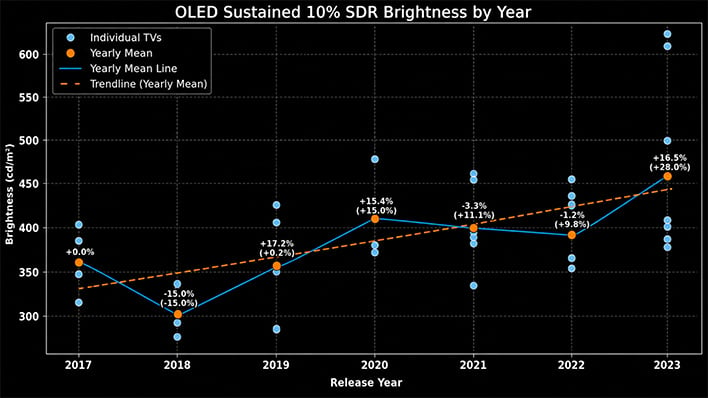
The root of the issue is a direct trade-off between peak luminance and longevity. The average 2023 OLED tested was found to be 28% brighter than the 2017 benchmark in a 10% SDR window test, and a staggering 52% brighter in a sustained full-screen SDR test.
During the intentionally grueling tests, which exposed displays to thousands of hours of continuous CNN viewing with a static news ticker, the newer panels still showed noticeable image retention and burn-in at the 10,500-hour mark. Because these panels were evaluated at their maximum default SDR brightness settings without compensation for their heightened output (versus older models), the sheer intensity of the light actually accelerated cumulative pixel wear.
This isn't necessarily cause for panic, nor should you automatically avoid OLED technology because of these tests. Rtings explicitly notes that this accelerated stress test does not reflect normal use, concluding with the statement: "What's clear is that for most mixed-content viewers, burn-in remains unlikely to become an issue." The site also points out that users with static-heavy workloads can simply lower their brightness settings to drastically reduce cumulative stress while still retaining a usable level of luminance.
In addition, major manufacturers have updated their official burn-in warranty policies to protect buyers.
The bottom line is that for the average consumer engaging in mixed viewing habits, burn-in remains a low hazard. And for all OLED owners, a little manual adjustment (as needed) can go a long way in protecting an OLED display, especially as manufacturers continue to crank up the brightness.




