



NVIDIA Rallies Over 100 Partners For Open Agent Safety Platform Launch


The Open Agent Safety Platform is fundamentally made up of two parts: NVIDIA Sentry and NVIDIA OpenShell. OpenShell is a fully open-source application that can run on both x86 and Arm processors, so it's available for anyone to use under a permissive Apache license, which is very cool of NVIDIA. Sentry, on the other hand, is described as a hardware-based reference system design that serves as a continuous out-of-band watchdog to monitor agent behavior
How NVIDIA Sentry And NVIDIA OpenShell Work

First, lets discuss OpenShell, since it's far more likely to be relevant to the majority of readers. OpenShell is a powerful runtime that allows sysadmins to create specialized sandboxes around AI agents that can carefully enforce highly granular permissions for the agents so-enclosed. It has more capabilities than that, too; it allows agents to access services without exposing provider credentials to the agents, and it also has functionality built-in where agents can request additional network access from the OpenShell Supervisor.

Without getting too far into the weeds—you can check NVIDIA's blog post for additional detail—OpenShell is fundamentally built around three components: the OpenShell Gateway, the OpenShell Supervisor, and the OpenShell Sandbox. Agents live in sandboxes, and have no network path except through the supervisor. The supervisor can verify the safety of agent actions using a formal logic-based prover that rigorously verifies the permissions granted to agents through the configured policies. It's quite an advanced setup.

While OpenShell is available to anyone, NVIDIA Sentry is only available on Team Green's own servers at this time. Sentry provides agent reasoning inspection and "tamper-proof telemetry," so described because the agents themselves can't reach the Bluefield-4 DPU that the Sentry software runs on. NVIDIA says Sentry offers "millisecond-scale containment and quarantine" through "continuous agent monitoring and threat detection," although there aren't a lot of details as to what the means just yet.

Many Partners Have Joined NVIDIA To Push Better AI Agent Security
A huge portion of AI companies have rallied behind the Open Agent Safety Platform, including big names like Anthropic, Cisco, CrowdStrike, Dell, HPE, Hugging Face, JPMorganChase, Lenovo, Microsoft, Palantir, Perplexity, Red Hat, Salesforce, and SpaceXAI among many others. Notably missing from the list are AMD, Google, Intel, OpenAI, and Meta, though not because these firms think AI agent security isn't a big deal—all of these companies are in AI chip competition with NVIDIA now.Indeed, while there's a lot of naysaying about the threats of misbehaving AI agents, the truth is that most of the people downplaying the issue simply don't understand what they're talking about. It's not a "Terminator" type situation like President Trump thinks, but rather the fear is that agents can 'drift', meaning that they begin to take actions that don't directly support the intended goal. This can happen for lots of reasons: bugs, missing tools, conflicting policies, or even simply a bad prompt from a user.
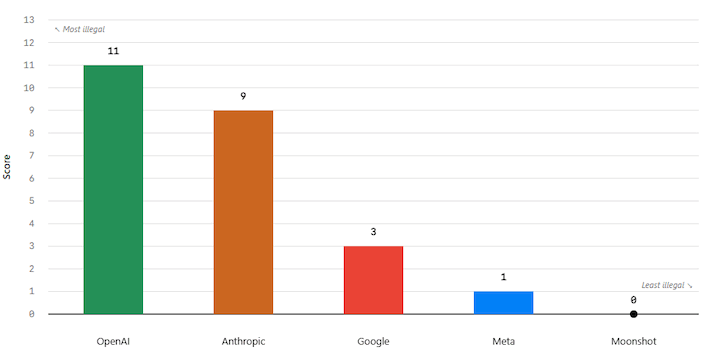
AI agents are exactly as powerful as you allow them to be. Their capabilities can include web search and browsing, code execution, database or document retrieval, API interfaces, and more. It doesn't take a genius to see how an agent could interpret a command more literally or more liberally than the user intended and start to drift from the expected behavior; language can be imprecise, after all. These are the issues NVIDIA's new security tools are designed to help prevent.
If you're curious about OpenShell or Sentry, you can check out the code and get started with it by heading to NVIDIA's GitHub repository. There's a quickstart guide there that will get you up to speed.





