



Microsoft Outlook Glitch Locked Artemis II Astronauts Out Of Mission‑Critical Emails


The glitch occurred during the crew’s first full day in orbit, a time typically reserved for critical systems checks and marveling at the Earth’s curvature. Instead, Wiseman was heard saying to Houston mission control: "I also see that I have two Microsoft Outlooks and neither one of those are working," Wiseman sounded less like a space explorer and more like a regional manager calling the IT help desk on a Monday morning. He politely suggested that Houston remote in to the spacecraft to fix the issue. Talk about long-distance tech support.
The absurdity of the situation was not lost on the thousands of viewers watching the mission’s livestream. While the spacecraft relies on radiation-hardened hardware and custom-built flight software for survival, personal tasks and scheduling are handled by the crew's individual personal computing devices (PCD) that are sadly still subject to the same crashes or "Not Responding" spinning wheel of eternity that plague Joe Shmoe using his PC at Starbucks.
Mission control eventually managed to remote into the astronauts' devices to resolve the conflict. They later informed the crew that Outlook was finally open, though they warned it would appear offline, which understandably is the expected state for an email client currently exiting the Earth’s magnetosphere. This latest snafu followed a series of more traditional space-age headaches, including a jammed urine extraction fan and early reports of a faulty heat shield.
Aside from sparking new memes, the incident has likely sparked discussions in the the aerospace community regarding the wisdom of bringing legacy enterprise software into deep space. I guess as a back up, NASA can always return to the good old 60s communication transmitted via handwritten notes held up to the camera.
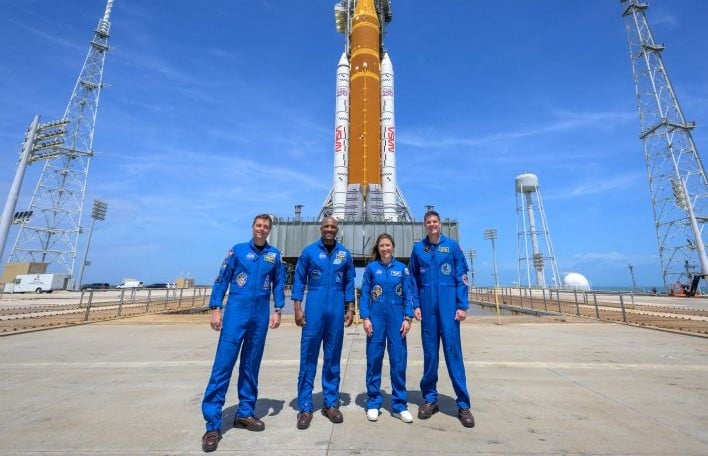
Artemis II is a 10-day, four-person crewed lunar flyby mission that launched on April 1, marking the first human trip to the Moon since 1972. It is also the first crewed test flight of the Space Launch System (SLS) rocket and the Orion spacecraft, taking astronauts around the Moon to test life-support systems for future, longer-duration missions.





