



Microsoft Exposes Sneaky Unicode Trick Hiding In Millions Of Emails


This ASCII smuggling campaign seemed to start around February 2nd, when between 5 and 20 thousand spam emails using the technique were detected by Microsoft. The volume rapidly jumped up to 1.32 million on February 8th, increased to a peak of 2.37 million on February 11th, and maintained high levels until February 14th. There, it briefly peters off as low as 14 thousand before shooting back up to 1.5 million. Following that activity, a continuous wave of on-and-off weekday peaks proceeded through March into mid-June.
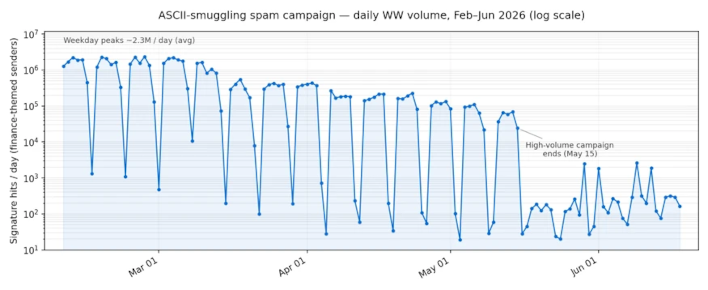
Fortunately, ASCII smuggling is just a newer variation of the classic keyword smuggling tactic. This means that existing security software can be updated to filter it out relatively quickly. Adding common ASCII filler tags to your filters would be a good place to start.
As both Microsoft and we will warn you, it's always important to be vigilant and maintain updated protection against spam and phishing emails. Informing your employees, coworkers, customers, or family members about cybersecurity risks can help prevent them from making bad decisions when they see an official-looking email that is actually a scam.




