



Micron’s $24 Billion Singapore Megafab Aims To Solve AI‑Era Memory Crunch


Micron has committed to investing $24 billion over the next decade to expand its NAND manufacturing complex in Singapore. As part of the massive investment, Micron broke ground on an advanced fabrication facility within the existing complex, and when finished, it will span 700,000 square feet of cleanroom space. Barring any delays, it's also on track to become the first double-story wafer manufacturing fab in Singapore.
News of the expansion comes less than two months after Micron announced it was winding down its consumer-facing Crucial brand after a 29-year run in order to focus its broader business strategy on its "larger, strategic customers in faster-growing segments." In other words, data center customers who are riding the AI boom.
That AI boom has put a strain on memory chip supplies in the consumer market, which in turn has driven up prices on PC DRAM, storage, and related products (like PCs). Earlier this month, Micron's VP of Marketing, Mobile, and Client Business Unit, Christopher Moore, assure that the company wasn't abandoning consumers, but serving them "through different channels."
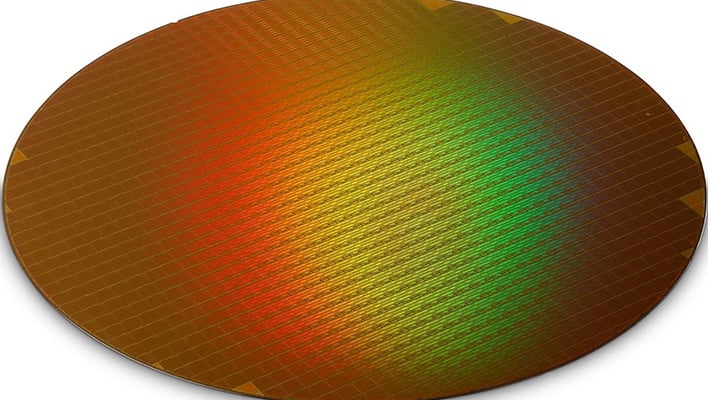
The expanded site at Micron's Singapore location will help satiate what's so far been an insatiable demand for NAND that's driving the rapid expansion of AI and data center applications, though it won't happen overnight. Micron says wafer output is expected in the second half of 2028.
Ahead of that date, Micron says the same site is on track to "contribute meaningfully" to the company's supply of high bandwidth memory (HBM) in 2027. HBM is commonly found in data center products, including advanced accelerators from AMD (such as its Instinct MI455X) and NVIDIA (such as Vera Rubin).
"As HBM becomes a part of Micron’s Singapore manufacturing footprint, the company expects opportunities for synergies between NAND and DRAM production. Micron will maintain flexibility in managing the pace of capacity ramps in the new facility to align with market demand," Micron says.
Micron expects the Singapore site expansion to create an additional 1,600 jobs in the region, which combined with 1,400 new jobs from its HBM advanced packaging facility, will bring the tally to around 3,000 new jobs. The new positions will span a variety of roles, including fab engineering and operations, AI integration, advanced robots, and smart manufacturing technologies.




