



Lyrids Meteor Shower Returns This Month With Up To 20 Shooting Stars Per Hour


Active from April 17 to April 26, the shower is expected to hit max intensity during the overnight hours of April 21 into the early morning of April 22. Astronomers estimate a Zenithal Hourly Rate (ZHR) of approximately 18 meteors per hour under ideal conditions, and possibly as many as 20(ish). These meteors are fragments of Comet C/1861 G1 Thatcher, which takes roughly 415 years to orbit the Sun. So as Earth intersects this dust trail, the particles collide with our atmosphere at 110,000 miles per hour, leaving glowing trains of ionized gas that linger for several seconds.
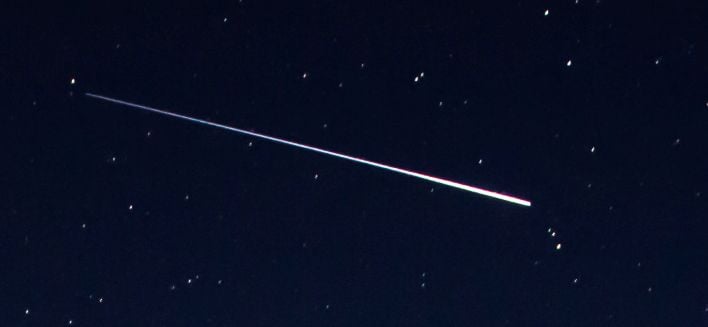
This year, though, the moon will greatly affect visibility. A waxing crescent moon will set shortly after midnight on the peak night, leaving the crucial pre-dawn window in complete darkness. This timing is ideal, as the shower’s radiant point will be near the star Vega in the constellation Lyra. This constellation rises high in the northeast after 10:00 p.m. local time, but reaches its highest point just before dawn, which is typically when the most meteors are visible.
The Lyrids are famous for their particularly bright meteors that can cast shadows for a split second and punch deeper into the atmosphere than average space dust. Unlike many other showers that produce consistent but faint streaks, the Lyrids are characterized by these sudden bursts of luminosity. Though they lack the sheer volume of the Perseids, their history with humans is older; Chinese astronomers first documented the Lyrids shower in 687 BC, noting that "stars fell like rain."
For the best experience, find a location away from city lights and lie flat on your back with your feet facing east. This orientation provides the widest view of the sky, allowing your peripheral vision to catch streaks that may appear far from the radiant. Note that it takes about 30 minutes for human eyes to fully adapt to the dark, so observers are encouraged to put away smartphones and flashlights well before the peak viewing window begins. Because the Lyrids can be sporadic, patience is required; there may be long lulls followed by several meteors appearing in quick succession. If you're willing to wait, the 3:00 a.m. to 5:00 a.m. window is the most promising time for those hoping to spot the most fireballs.
Photo credits: Wikimedia Commons





