



Lenovo Confirms How Long It Will Support Its Legion Go Gaming Handheld


Considering how beloved the Legion Go is (see our review), it makes sense for Lenovo to commit to its long-term support. For its late 2023 launch, Lenovo's handheld turned out to be a worthy competitor to Valve's Steam Deck LCD and the ASUS ROG Ally (Z1 Extreme), in ways apparent from just a glance. The screen is larger (8.8-inches) and it boasts a more vibrant IPS panel with 144Hz refresh rate and 2560x1600 resolution.
While the Steam Deck LCD eventually received a patch to enable a saturated color mode that helped offset the limited 63.7% of sRGB color gamut coverage, the Legion Go launched with a panel that hit 97% DCI-P3 gamut, performing on par with entry-level color grading monitors. The detachable controls also recalled the Nintendo Switch's Joycons, though the touchpad inclusion isn't as good for co-op play. USB hubs and cheap Bluetooth controllers do exist, though, at least on Windows.
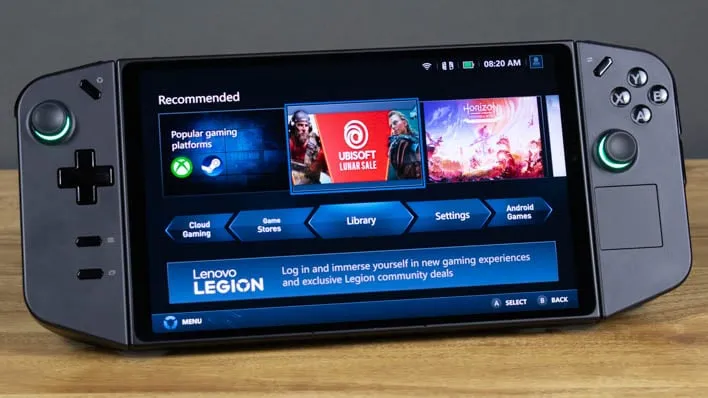
Surprisingly, Lenovo was noticeably unhappy with having to make this statement. Prior to giving its official reply on the podcast, it characterized word that Legion Go was being discontinued as "ugly rumors." It's showing remarkable commitment to its product line despite having released additional products, which is a notorious weakness in the handheld and mini PC space, where manufacturers often slack on long-term support in favor of starting the next crowdfunding drive.
The podcast does also point out that Legion Go still hasn't received many updates, but even the flat commitment to keep the device maintained until 2029 is more than most competitors in the space will give you. So while Lenovo is setting itself apart here, it is worth noting that the bar has been set rather low with devices not manufactured by Steam, ASUS, or other major brands.




