



Intel Hears You And Signals It May Slow Down Socket Changes For Future Chips


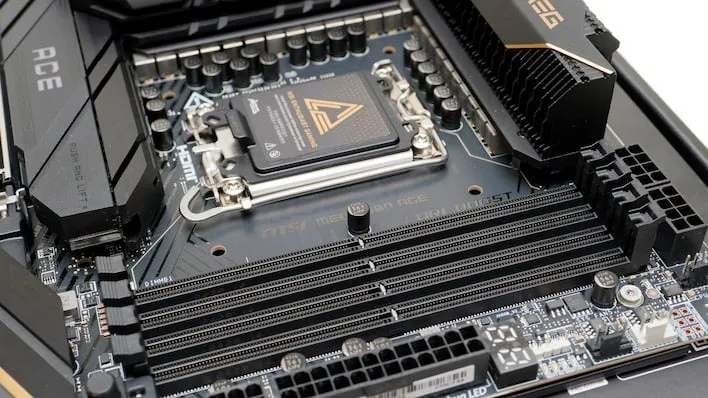
The big news today is that reviews of Intel's Core Ultra 7 270K Plus and Core Ultra 5 250K Plus processors are live, including our own, and of course these Arrow Lake Refresh parts slot into the same LGA 1851 socket as their regular, non-Plus Arrow Lake counterparts. What about future generation CPUs, though? This is probably the end of the road for LGA 1851, though a shift in socket longevity at Intel could be coming.
Our longtime friend Robert Hallock spoke with the folks at Club386 about Intel's future socket plans, which presumably will include a new LGA 1954 socket for Nova Lake with new Z990 and Z970 chipsets inbound. That means a motherboard upgrade is in the cards for current LGA 1851 motherboard owners who may be tempted to jump into Nova Lake when it arrives, though there's a chance that Intel's next socket may extend to multiple CPU generations.
We've seen AMD win over enthusiasts with its approach to socket longevity, starting with the introduction of its original Zen architecture and AM4 socket (which is still getting new CPU releases). AM4 went on to span multiple generations of Zen, including Zen+, Zen 2, Zen 3, and AMD's initial Zen 3 models with 3D V-Cache.
Of course, there are still reasons why someone might want to upgrade their motherboard when a new generation CPU architecture arrives, as the latest platforms often introduce support for new features and perform better than older models. Still, having the option to just update the BIOS and swap in a newer generation CPU is a nice perk when available.
Hallock, who spent 12 years at AMD before transitioning to Intel nearly three years ago, says one thing he really wants users to understand is that he and his team are "first and foremost, PC builders and enthusiasts. Every single one of us has built their own PC, games on that PC. That was not always the case at Intel."
Reading between the lines, the broader message is that Intel, as it's now currently constructed, understands the criticism over the company's comparatively short socket longevity, and to some extent, every person on his teams feels it.
Looking ahead, Hallock points out that Intel has several new teams in place, including fresh blood on the product management, business, marketing, and engineering teams that are involved in Intel's gaming CPUs. He also says they are are "not ignorant of the feedback" that people have about Intel's products.
"We watch it very closely… some of that feedback we can act on in a six-month time span, a year-long time span, a three-year time span. But we are listening, and that feedback matters quite a lot. It absolutely influences how we think about our products and our roadmap," Hallock says.
To be clear, Hallock's comments should not be viewed as confirmation that LGA 1954 will support multiple generations of CPU releases. However, it does suggest that Intel is listening, it's heard the criticism, and strongly hints that at some point, future sockets will span more CPU generations than they have in the past, whether that starts with LGA 1954 or whatever comes after.




