



Celestial Spectacle: How To See This Week's Rare Full Blue Moon Event


So, what does a Blue Moon mean? A calendrical blue moon occurs when two full moons fall within the same calendar month. It happens because the lunar cycle, the time it takes the Moon to complete all its phases from new moon back to new moon, runs approximately 29.5 days. That's just short enough that a month can occasionally fit two full Moons, especially when the first one lands on the 1st or 2nd. That's exactly the setup in May 2026:
- First Full Moon: Friday, May 1, 2026 (17:23 GMT)
- Blue Moon: Sunday, May 31, 2026 (08:45 GMT)
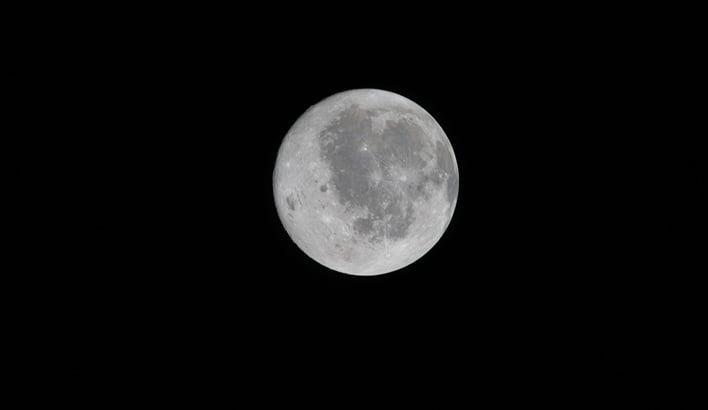
Because the Moon hits peak illumination at a fixed universal moment, your local time zone determines which calendar date you actually observe it. Skywatchers in Hawaii, sitting 10 hours behind UTC, will see peak illumination late Saturday evening, May 30. For those on the East Coast of the United States, peak will occur at approximately 4:45 a.m. EDT.
This Blue Moon pulls double duty. The full Moon on May 31 occurs just before the Moon reaches apogee, the point in its orbit when it sits farthest from Earth. That makes it a micromoon.
At roughly 252,360 miles (406,135 km) away, compared to an average distance to the Moon of about 238,900 miles (384,472 km), the lunar disk will appear slightly smaller and dimmer than usual. The difference is subtle, you won't notice it with the naked eye unless you're comparing lunar photographs side by side, but it's real.
Astronomically, the Moon sits in the constellation Scorpius near its brightest star, Antares, before moving into Ophiuchus.
For viewing, no equipment is required. The full Moon is easy to spot with the naked eye, though binoculars offer a great view of the dark lunar maria and other large surface features.
For the most dramatic view of the Blue Moon, step outside during moonrise or moonset on the evening of May 31. Near the horizon, the atmospheric "moon illusion" makes the Moon appear far larger and bathes it in a warm golden glow, an ironic twist for the year's technically smallest full moon.
Top image credit: Tim Sweezy





