



Flipper Zero Responds To Firmware Fears With New Community Roadmap


Some history helps explain how things got here. The Flipper Zero launched on Kickstarter in 2020 to enormous support and equally enormous skepticism, with critics branding the team scammers who would pocket $5 million and vanish. The company instead fought through post-COVID component shortages and supply chain chaos to deliver every backer's device, even if it took longer than anyone hoped.
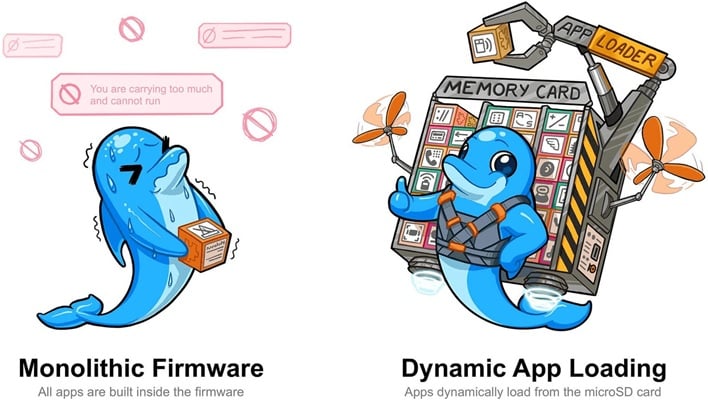
The hardware itself imposed a hard ceiling on what came next. The Flipper Zero has just 700KB of flash memory available for firmware, a limit the team hit quickly. The workaround was dynamic app loading from the microSD card, which moved many functions, including core features, out of the firmware and into standalone apps. That architecture became the foundation of stable firmware 1.0, released in 2024 alongside a polished interface and a stabilized API and SDK for developers. With the core essentially finished, the team scaled back to infrastructure upkeep and critical bug fixes while pivoting toward new hardware. Reasonable enough on paper, though the accompanying drop in real-time communication left users fearing abandonment.
Zhovner admits the team underestimated how much people care about the official firmware, and resources are now being allocated to keep supporting community contributions. The catch is that the old free-for-all is over. With more than a million users flooding every channel, the company disabled direct messages on social media and says separating genuine community needs from one person's niche wish became impossible.
Going forward, all communication with the development team happens exclusively through GitHub discussions. Users can submit concrete, properly formatted feature requests, and the community votes on them. The team commits to reviewing the most popular requests on a weekly basis, letting demand rather than volume decide where limited engineering hours go. General chatter and help requests stay on Discord, Reddit, and social channels.
Code contributions face tighter scrutiny too, no small matter for a device whose third-party firmware scene has produced everything from harmless pranks to car break-in tools. An updated contribution guide promises stricter pull request evaluation, particularly for AI-generated code touching low-level libraries that is difficult to verify, along with changes affecting the device interface. The company is also publishing the integration test cases its QA department used internally, and every firmware change must now pass them, with the community pitching in on regression testing. Submissions to the Apps Catalog continue working as before.
For a device that spawned an entire ecosystem of alternative firmware and community apps, this feels like a sensible middle path. The Flipper Zero keeps an officially maintained foundation while Flipper Devices chases its next act, and the loudest signal about what comes next now belongs to whoever rallies the most votes.





