



April Pink Moon 2026: First Full Moon Of Spring Gets Ready To Peak


Despite its name, the Pink Moon doesn't actually have a rose-colored hue. Instead, the title originates from the phlox subulata, or moss pink, a wildflower native to eastern North America that blankets the ground in early spring. To the casual observer, the moon will appear as a standard, glowing white orb, though it may take on a golden or orange tint as it sits low on the horizon from the scattering of light through the Earth’s atmosphere. This year, the moon will also be accompanied by the blue-white star Spica, the brightest light in the Virgo constellation, which will appear two degrees away on April 2.
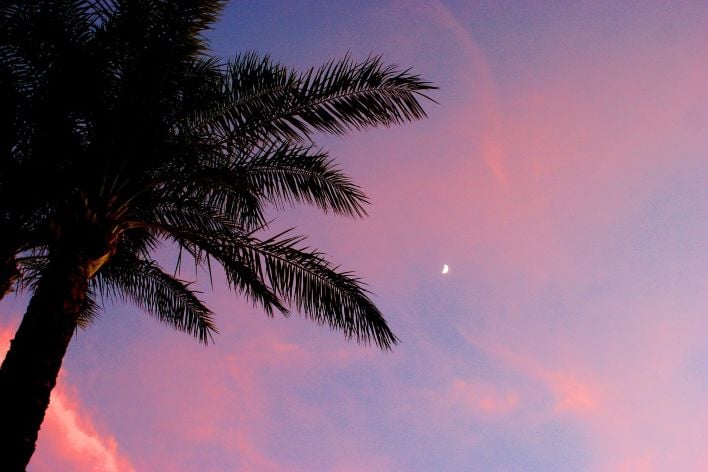
For those in the United Kingdom and Europe, the peak occurs in the early hours of Thursday, April 2, at approximately 3:12 a.m. BST. However, seasoned stargazers know that the best time to watch is not necessarily at the moment of peak fullness, but during moonrise. As the moon emerges from the eastern horizon at sunset, it often appears unnaturally large, a.k.a. the moon illusion.
Beyond being a target for skygazers, the pink moon carries weight for various cultural and religious calendars. In the Christian tradition, this is the Paschal Full Moon, the first full moon following the spring equinox. The timing of the moon determines Easter, which will fall this year on Sunday, April 5. Similarly, it marks the beginning of the Jewish Passover and coincides with the Hindu festival of Hanuman Jayanti.
The Old Farmer’s Almanac notes that various Indigenous tribes have their own names for this moon, reflecting the specific environmental shifts of the region. While some call it the Sprouting Grass Moon or the Egg Moon, others, like the Oglala, refer to it as the Moon of the Red Grass Appearing. In more northern climates where winter lingers, it is known as the Breaking Ice Moon.
For the best viewing experience, find a high vantage point with a clear sight of the eastern horizon, away from city lights, and look for the brilliant light of Jupiter shining high in the southwest completing the package.





