



Entry Level PC Market Predicted To Totally Vanish By 2028


Holy Houdini, if the latest market projections from analyst firm Gartner prove correct, we're only two years away from sub-$500 PCs vanishing from the market entirely. The reason, as you may have already surmised, is a continued strain on memory and storage that will drive up prices even further, which in turn will send PC worldwide PC shipments plummeting.
Take a look around at the landscape for standalone memory and storage products and you'll end up depressed. Be that as it may, Gartner believes things are about to go from bad to worse, with the market research firm estimating a massive 130% surge in combined DRAM and solid state drive (SSD) prices by the end of this year.
Should that happen, it will drive PC prices up 17% and smartphone prices by 13% compared to 2025 level. Likewise, the firm is predicting a 10.4% drop in global PC shipments and 8.4% decline in smartphone shipments in 2026. It's all part of what Gartner's Senior Director Analyst Ranjit Atwal is calling the "steepest contraction in device shipments witnessed in over a decade."
According to Atwal, this will all result in buyers holding onto existing PCs and smartphones for longer periods of time, which will fundamentally shift traditional upgrade cycles. But it gets even worse.
DRAM will balloon from 16% to a peak of 23% of the total BOM (bill of materials) for PCs this year, causing entry-level systems to evaporate.
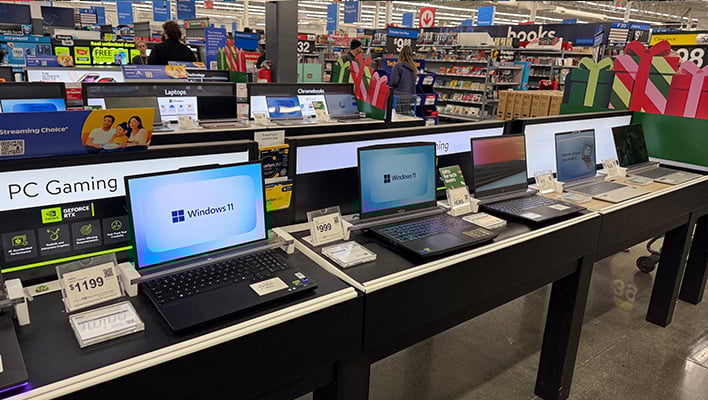
Say goodbye to sub-$500 laptops and hello to higher priced models, if Gartner's prediction rings true.
"This sharp increase removes vendors’ ability to absorb costs, making low-margin entry-level laptops nonviable. Ultimately, we expect the sub-$500 entry-level PC segment will disappear by 2028," Atwal says. "In addition, rising AI PC prices will delay the projected 50% market penetration of AI PCs until 2028."
The surge in memory pricing is predicted to disproportionately affect entry-level smartphones as well, though the PC market is anticipated to be hit the hardest. To that end, it's worth noting that Apple today unveiled its relatively affordable iPhone 17e with 50% more memory (12GB versus 8GB) than the iPhone 16e, while keeping the launch price the same at $599. Apparently, smartphone makers are in a better position to weather the storm.
"Overall, device vendors and channels face a critical window in the first half of 2026 to optimize pricing and protect margins before component inflation compresses profitability from the second quarter onwards," Atwal adds.
We've asked this before and it bears asking again: Are we having fun yet?




