



Microsoft DirectX 12 Update Could Double Path-Traced Game FPS, Boost Game AI


The most immediate benefit for gamers comes from the standardization of DXR 1.2, which brings Shader Execution Reordering (SER) and Opacity Micromaps (OMMs) out of preview. Path tracing is notoriously taxing because rays bounce unpredictably, causing massive inefficiencies in how the GPU processes the data. SER dynamically sorts these disorganized ray-tracing workloads into neat, parallel threads, while OMMs drastically reduce the processing cost of complex, alpha-tested geometry like foliage and fences. Previously championed as NVIDIA Ada Lovelace architecture features, their inclusion in the official DirectX API means AMD and Intel GPUs can now theoretically leverage these same path-tracing optimizations for massive FPS boosts in path-traced games.
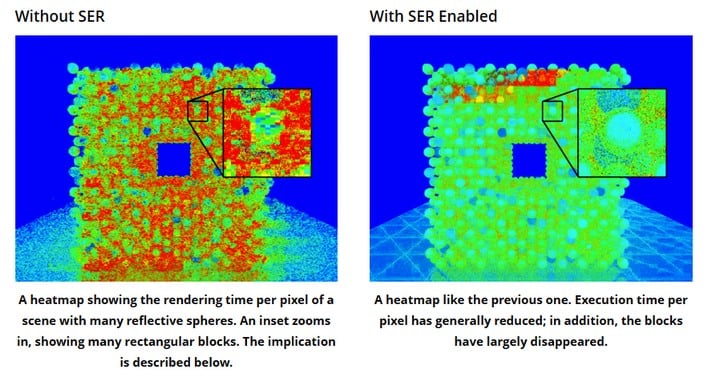
Beyond ray tracing, Shader Model 6.9 introduces native "Long Vector" support and required 16-bit float operations, laying the groundwork for the future of AI in gaming. While the technical specifics involve manipulating vectors up to 1024 elements in length, the practical application is all about machine learning. This standardization allows developers to run complex AI workloads directly within the graphics pipeline, enabling things like neural texture compression and dynamic ML-powered characters. By executing these tasks more efficiently, GPUs can dedicate more resources to actual rendering rather than being bogged down by the raw math behind the AI features.
The update also tackles several long-standing PC gaming annoyances through new Direct3D "customer-requested" features. Revisions to Resource View Creation APIs and CPU Timeline Query Resolves significantly streamline how games talk to the hardware. For the average player, this translates to reduced CPU overhead and much smarter memory management. As modern titles continue to push the boundaries of texture sizes and open-world complexity, these API-level fixes will help to mitigate the stuttering and VRAM bottlenecking that have plagued recent PC ports, particularly on 8GB graphics cards.
The takeaway is that Agility SDK 1.619 signals a major shift in how the industry handles the most demanding rendering techniques. By baking these advanced efficiency features directly into the DirectX standard, Microsoft is leveling the playing field for all GPU manufacturers. For PC builders, this means current-generation hardware will likely age better as developers implement these standardized tools, and the next wave of visually ambitious games should run smoother, smarter, and with significantly less stuttering right out of the box.





