



China Allegedy Issues De Facto Ban On NVIDIA H200 AI Chip Imports


There have been plenty of twists and turns in NVIDIA's ongoing efforts to resume AI chip shipments to China, the latest of which involves a de facto ban by Beijing. In what could be a move to bolster China's bargaining power, people who are purportedly familiar matter told Reuters that Beijing has instructed customs agents not to permit NVIDIA's H200 chips from entering the country.
Government officials also reportedly met with domestic technology firms and told them to cease buying H200 chips except when absolutely necessary, such as for research and development partnerships with universities. Regardless, one of the sources described the messaging as being "so severe that it is basically a ban for now," with the caveat that things may change.
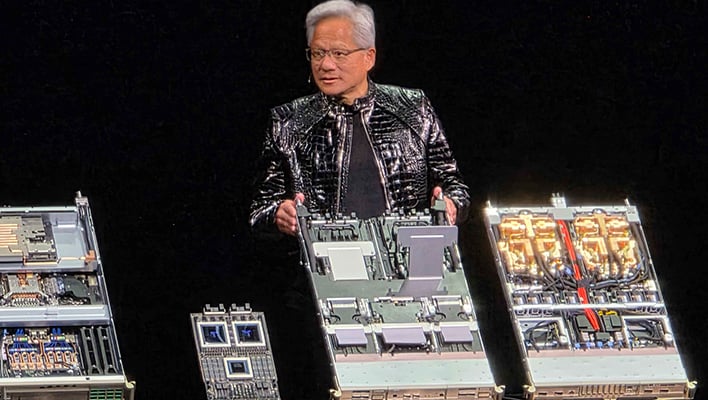
Pictured above is NVIDIA CEO Jensen Huang at CES showing off the firm's next generation Vera Rubin hardware. The U.S. government is not permitting NVIDIA to ship AI chips based on its current generation Blackwell architecture to China, let alone upcoming Vera Rubin silicon, but did agree to allow the company to export parts on Hopper.
One of the caveats is that NVIDIA must pay the U.S. government a 25% cut of chip revenue from chips sold to China, which represents a renegotiated fee from the original 15% royalty the government previously imposed. While 25% is a sizable chunk, China is a potentially lucrative market where NVIDIA could generate billions of dollars in additional revenue.
Getting China to play ball is the other big hurdle and it's proving difficult to overcome, despite Huang repeatedly sounding off on why the U.S. should be less stringent on its export rules. For example, before the Trump administration gave the green light to ship Hopper to China, Huang warned that it was vital for the U.S. to remain competitive in the AI chip race, and that "winning developers worldwide" would be conducive to that goal. The also spoke out against export restrictions as being counterproductive to that goal, saying that "China is nanoseconds behind America in AI."
So why is China suddenly being difficult? Only Chinese officials know for sure, though a recent report suggested NVIDIA was requiring 100% upfront payment for chip exports to the region, whereas in the past it was willing to accept a partial deposit. An NVIDIA spokesperson would later issue a statement denying the report.




