



Bulging Ryzen 9 7950X3D Puts AMD's Warranty Policy In The Spotlight


Photos posted by the owner clearly show deformation of the CPU substrate, though the exact cause remains unknown. AMD has not publicly commented on the case, and it is unclear what evidence was reviewed during the warranty evaluation process. The reaction has been particularly strong among Taiwanese PC enthusiasts on the PTT boards. Many commenters argue that the visible physical damage is itself evidence of the failure being reported, rather than proof of customer misuse. Their position is fairly straightforward: if the processor suffered a catastrophic electrical or thermal failure, physical damage would be the obvious expected outcome.

Others are more cautious. While sympathy for the user is widespread, some observers have questioned whether all relevant information has been disclosed. AMD generally replaces failed processors under warranty without significant controversy, raising the obvious question of why this particular claim was denied. Details such as BIOS configuration and date as well as any findings from AMD's internal inspection process have not been revealed.

One detail that has attracted attention, though, is the platform involved. The processor was installed in a Gigabyte X670E Aorus Master motherboard purchased during the turbulent period when excessive SoC voltages on AMD CPUs became a major industry controversy. In 2023, multiple reports emerged of damaged Ryzen 7000X3D processors and scorched AM5 sockets, eventually prompting motherboard vendors to release emergency BIOS updates limiting SoC voltage behavior. That history doesn't establish a connection to this failure, but the system was also reportedly running an older BIOS version. Now, using an outdated BIOS is not, by itself, grounds for warranty denial. Still, the timing and hardware combination have led some enthusiasts to wonder whether the incident could be related to long-term electrical stress rather than a sudden user-induced event.
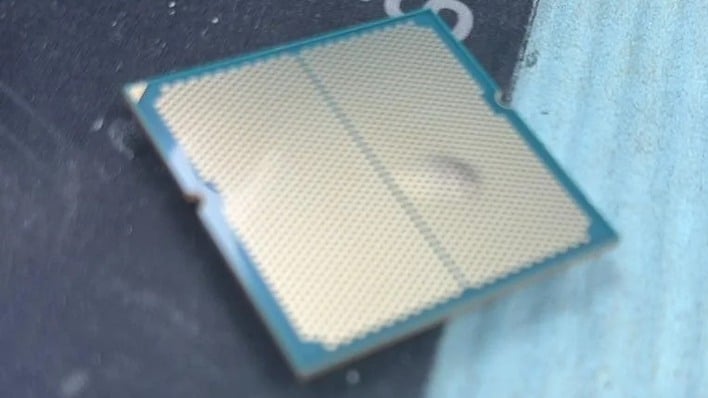
The case also arrives amid several years of high-profile AM5 failure investigations. Since the original Ryzen 7000X3D voltage controversy, the industry has seen multiple disputes involving damaged X3D processors (including the newer Ryzen 9000 family), motherboard firmware behavior, and disagreements over fault attribution between users, motherboard vendors, and AMD. In some cases manufacturers ultimately accepted responsibility; in others, investigations pointed toward configuration issues, user error, or simply isolated hardware faults.
Based solely on the information provided by the user, it's really hard to conclude that the damage was definitively caused by user error. At the same time, outside observers lack access to whatever evidence AMD may have relied upon when evaluating the claim. Until additional information emerges, the result is a familiar one for hardware enthusiasts: a dead processor, a denied warranty claim, and far more questions than answers.





