



Astronomers Spot A Rogue Planet The Size Of Saturn Hurtling Through Space


Astronomers have detected a massive, lonely world drifting through the darkness without a star to call home. This Saturn-sized rogue planet was discovered by an international team of scientists using the gravitational microlensing technique.
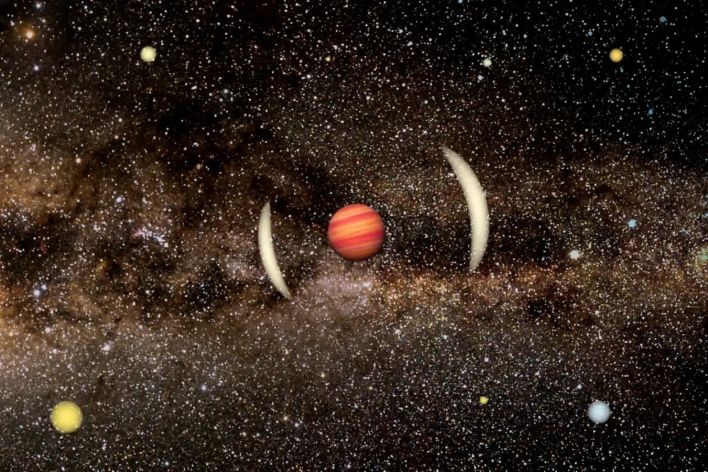
Unlike most planets, which orbit a parent star like our Sun, rogue planets (or free-floating planets) are nomads that wander through the interstellar void. Like the first rogue planet discovered 25 years ago, the latest gas giant suggests that the galaxy might be teeming with millions of orphaned planets that have been violently kicked out of their original solar systems.
A team of scientists, led by Professor Dong Subo from the National Astronomical Observatories, Chinese Academy of Sciences found the solitary planet using gravitational microlensing, i.e. when the planet passed between Earth and a star in the background. The rogue planet’s gravity acted as a magnifying glass, bending the light of the star behind it.
The detection of a planet the size of Saturn is particularly special because they tend to be harder to find than Jupiter-sized giants. While larger planets exert a stronger gravitational pull and are easier to spot, this medium-sized find indicates that the processes that eject planets from their home systems are common and affect worlds of various scales. Scientists believe these ejections typically happen during the chaotic early stages of a solar system’s formation. When large planets migrate or pass too close to one another, the resulting gravitational upheaval can result in one planet being flung into deep space.
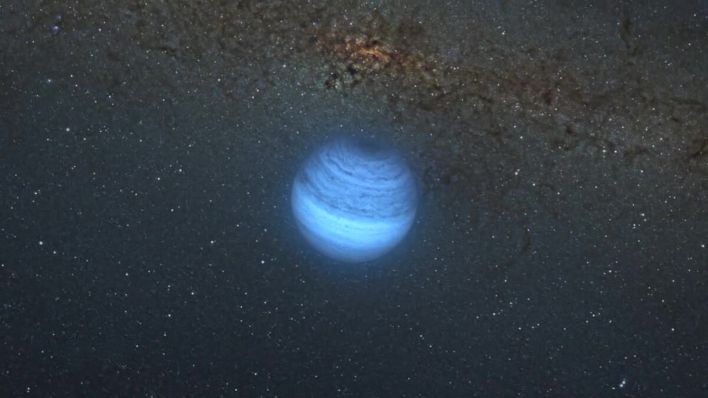
Despite their inhospitable reputation, rogue planets remain a subject of intense fascination regarding the potential for life. Some theorists suggest that if a rogue planet possessed a thick enough atmosphere or internal geothermal heating, it could potentially maintain liquid water beneath an icy crust, even without a sun. While this Saturn-sized world is likely a frigid ball of gas, one can only wonder what else is out there.
Still, as telescopes become more powerful and sensitive, such as the upcoming Nancy Grace Roman Space Telescope, the hunt for these nomadic worlds will intensify. Each new discovery provides a vital piece of the puzzle regarding planetary dynamics and the violent history of our galaxy and the universe at large.





