



Astronomers Discover Asteroid Spinning So Fast It Should Have Torn Itself Apart


Designated 2025 MN45, the asteroid was identified by the international team of researchers using data from the recently-commissioned NSF–DOE Simonyi Survey Telescope in Chile. At 710 meters (0.44 miles) in diameter, or roughly the size of eight football fields, the rock completes a full rotation every 1.88 minutes. This makes it the fastest-spinning asteroid ever discovered for an object of its size in our solar system, and folks are wondering how it hasn't disintegrated yet.
Typically, asteroids of this scale are loosely bound collections of dust and boulders held together by weak gravity. Within the teams' observation sample, even the next fasted spinner completed a full rotation in under five minutes. Therefore, the fact that 2025 MN45 has survived such dizzying rotations without fragmenting could mean that the asteroid must possess immense internal cohesion.
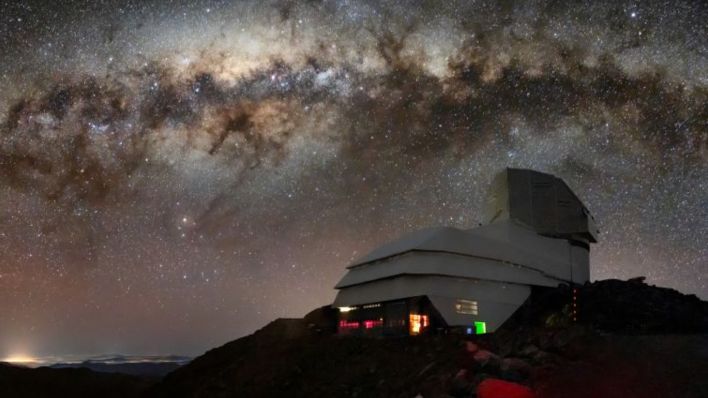
The discovery was part of a "First Look" data release from the Simonyi Survey Telescope, which used its massive LSST Camera to track variations in the light reflected by over 2,100 solar system objects. Lead author Sarah Greenstreet, an astronomer at the University of Washington and NSF’s NOIRLab, presented the findings at the American Astronomical Society’s winter meeting (and can also be seen in the The Astrophysical Journal Letters). She noted that the asteroid likely originated as a fragment from a much larger parent body that was once hot enough to melt and differentiate, leaving behind a dense, solid core.
While fast-spinning asteroids are occasionally found among Near-Earth Objects (NEOs), they're rarely detected in the distant main belt between Mars and Jupiter because they are much fainter and harder to observe. It's only thanks to the Simonyi Survey Telescope’s ability to capture high-res, time-lapse data that allowed scientists to find 19 super- and ultra-fast rotators in this region, with 2025 MN45 being the standout.
And this find is likely only the tip of the iceberg. As the Simonyi Survey Telescope begins its ten-year Legacy Survey of Space and Time (LSST), astronomers are expecting a deluge of similar discoveries that could rewrite the history of our solar system.
Main artist impression credit: NOIRLab





