



Apple Sends Urgent Warning To All iPhone Users: Get This iOS Update ASAP


Anyone who owns a modern or even semi-modern iPhone or iPad should stop what they're doing and urgently apply Apple's newly released iOS 26.2 update, as it's packed with over two dozen security patches, including multiple ones that are known to be actively exploited in the wild. The incremental but important update arrives just weeks after iOS 26 and iOS 26.1 released to the public.
The two trouble makers spotted in the wild are tracked as CVE-2025-43529 and CVE-2025-14174, both of which affect the WebKit engine that drives Apple's Safari browser. Starting with the former, anyone with with an iPhone or later is affected. Same goes for iPadOS users who own a third-generation 12.9-inch iPad Pro or later, 8th generation iPad or later, and 5th generation iPad mini or later.
Described as a user-after-free security flaw, Apple's latest update fixes the issue with improved memory management. Left unpatched, however, a determined hacker could craft malicious web content to remotely execute arbitrary code on a target device.
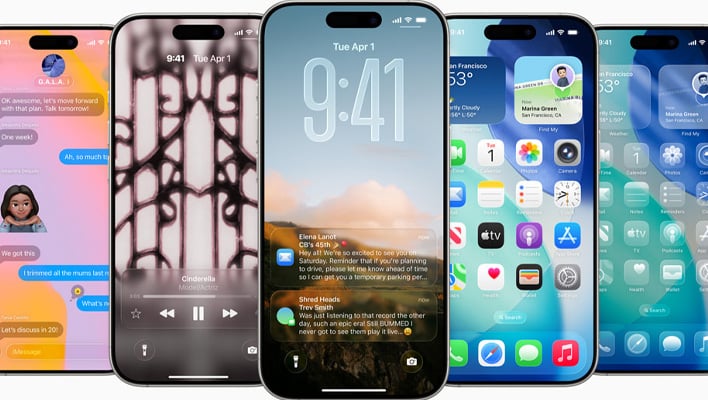
According to the patch notes, the flaw tracked as CVE-2025-43529 has already been observed in an "extremely sophisticated attack against specific target individuals," though Apple doesn't go into more detail. Nevertheless, the fact that it's be actively exploited is reason enough to apply the patch sooner than later.
As for the flaw tracked as CVE-2025-14174, it affects the same batches of iPhone and iPad devices previously mentioned and is another use-after-free exploit, which is a serious memory corruption vulnerability. That also mean the same threats apply—an attacker could remotely run malicious code on a target device.
Those are just two of the 26 flaws Apple outlines in its iOS 26.2 release notes. It also addresses issues related to FaceTime (password fields may be unintentionally revealed when remotely controlling a device over FaceTime), Photos (private or otherwise sensitive images in the Hidden Photos Album may be viewed without authentication), the iPhone and iPad kernel (apps can gain root privileges), and much more.
You can manually initiate an update to iOS 26.2 to address the issues outlined in Apple's release notes by navigating to Settings > General > Software Update.




