



Anthropic Leases SpaceXAI’s 220,000 NVIDIA GPU Colossus Cluster in Surprise Partnership


At the center of this deal is Colossus 1, a massive AI supercomputer built by SpaceXAI in record time to handle frontier-scale workloads. NVIDIA CEO Jensen Huang said during a podcast that it only took SpaceXAI 19 days to build Colossus.
"What they (SpaceXAI) achieved is singular, never been done before," Huang said. "A supercomputer that you would build would take normally three years to plan, and they can deliver the equipment, and then it takes one year to get it all working."
The cluster is equipped with over 220,000 NVIDIA GPUs, including the H100 and the newer H200 accelerators. Furthermore, it is slated to integrate NVIDIA’s Blackwell GB200 chips, which offer a significant leap in parallel performance for training large language models and complex multimodal systems.
Anthropic intends to leverage this immense processing power to expand the capacity and responsiveness of its subscription-based services, Claude Pro and Claude Max. By utilizing Colossus’s high-performance computing environment, the company expects to improve fine-tuning and inference speeds, directly benefiting users who rely on Claude for sophisticated generative AI tasks.
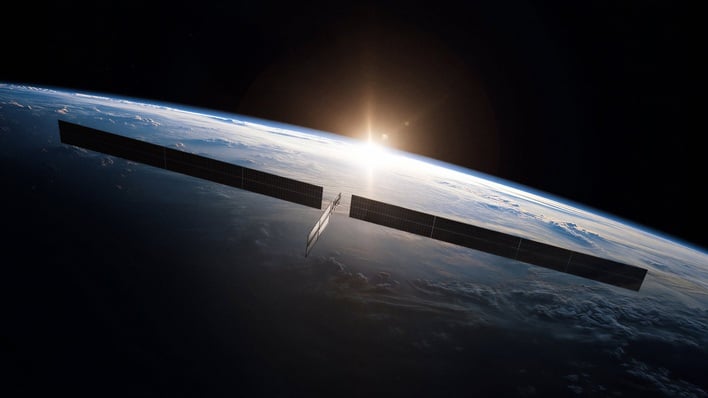
Beyond terrestrial infrastructure, the partnership includes a forward-looking proposal to develop multiple gigawatts of orbital AI compute capacity. This initiative stems from the growing realization that the power and cooling requirements of next-generation AI systems are beginning to outpace the availability of land and sustainable energy on Earth.
SpaceXAI is uniquely positioned to execute this transition. With its high launch frequency and proven experience in constellation operations, SpaceXAI aims to transform space-based computing from a theoretical research concept into a viable engineering program.
The transition to orbital compute offers a potential solution to the environmental and logistical constraints of ground-based data centers. By moving hardware into orbit, AI companies can access nearly limitless solar power and utilize the vacuum of space for cooling, reducing the carbon footprint associated with terrestrial power grids.
Anthropic has also announced three immediate changes to its platform aimed at improving the experience for its most dedicated users.
The company is doubling Claude Code's five-hour rate limits across Pro, Max, Team, and seat-based Enterprise plans. Alongside this, Anthropic is removing the peak hours limit reduction on Claude Code for Pro and Max accounts, meaning users will no longer experience throttled access during high-traffic periods.
Additionally, Anthropic has raised API rate limits "considerably" for its Claude Opus models. All three changes are effective immediately, according to the company.
While significant engineering hurdles remain—particularly regarding data latency and radiation shielding for sensitive AI accelerators, the collaboration between SpaceXAI and Anthropic signals a commitment to overcoming these barriers. If successful, this venture could define the next decade of AI development, shifting the industry’s physical foundation from the ground to the stars.





