



Toyota Built It's Own Game Engine For Cars Claiming Console-Grade Graphics


In an unexpected bit of news, Toyota has unveiled a proprietary game engine called Fluorite. Nope, this doesn't mean the company is entering the game development any time soon, but rather, is something we could likely see powering its future cars.
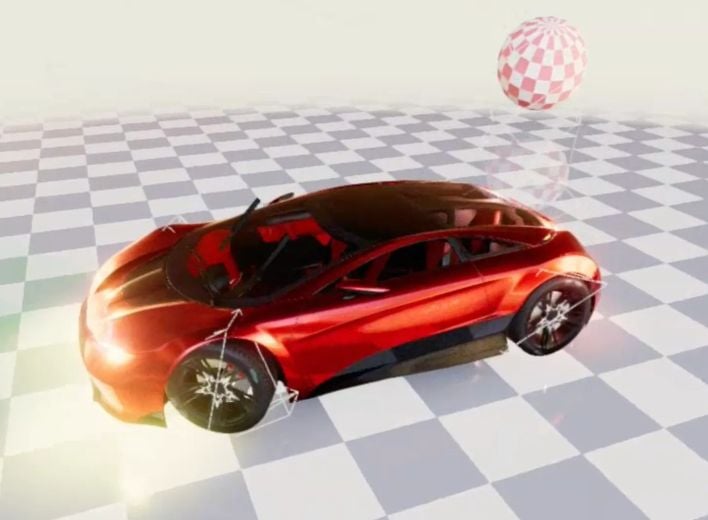
Developed by Very Good Ventures and Toyota Connected North America, Fluorite was introduced at FOSDEM 2026 in Brussels as an open-source, console-grade 3D engine. While the name might sound more like a toothpaste, the technology beneath the hood is built using Google’s Flutter UI toolkit and the Dart programming language. Fluorite is ultimately intended to bring high-fidelity, interactive 3D graphics to the embedded hardware found in car dashboards. By shifting to a custom engine, Toyota sidesteps the high licensing fees and heavy resource demands of industry giants like Unity or Unreal, which often struggle to run efficiently on the specialized, low-power processors used in automotive systems.
To that latter point, what makes Fluorite particularly interesting to the broader tech community is its hybrid architecture. It utilizes a high-performance C++ core based on an Entity Component System (ECS), which ensures that complex code can run smoothly even on weaker hardware. For the visual heavy lifting, it leverages Google's physically based rendering engine, Filament, to deliver the kind of lighting and texture quality worthy of gaming consoles. This allows for features like real-time 3D car models on the dashboard that users can rotate and interact with to check tire pressure or fluid levels, creating a seamless bridge between a car’s physical state and its digital interface.

Fluorite supports Hot Reload that allows developers to instantly update scenes and interfaces without restarting the system. It also features a unique workflow with Blender, where artists can define touch trigger zones directly within 3D models. This means a designer could create a 3D steering wheel or climate control knob in a modeling program, and it would be immediately interactive once imported into the car’s UI.
That said, what is this about supposed "console-grade" graphics? It's not so much a performance claim, but the capabilities of the game engine.
"Powered by Google's Filament renderer, Fluorite leverages modern graphics APIs such as Vulkan to deliver stunning, hardware-accelerated visuals comparable to those found on gaming consoles. With support for physically-accurate lighting and assets, post-processing effects, and custom shaders, the developers can create visually rich and captivating environments," a blurb on the Fluorite gaming engine page reads.
While Fluorite's primary goal is to power digital cockpits of upcoming Toyotas, its open-source SDK means the doors are also open for independent developers. Could a public release help move the engine into mobile devices, PCs, or even traditional gaming consoles? Could Toyota become a surprising new player in the global software ecosystem?





