



Qualcomm Accelerates AI Wearables With Snapdragon Reality Elite And START


Qualcomm is betting that the next wave of computing will be worn on the face and powered by AI. In two separate announcements, the chipmaker introduces Snapdragon START for personal AI smartglasses and Snapdragon Reality Elite for spatial computing.
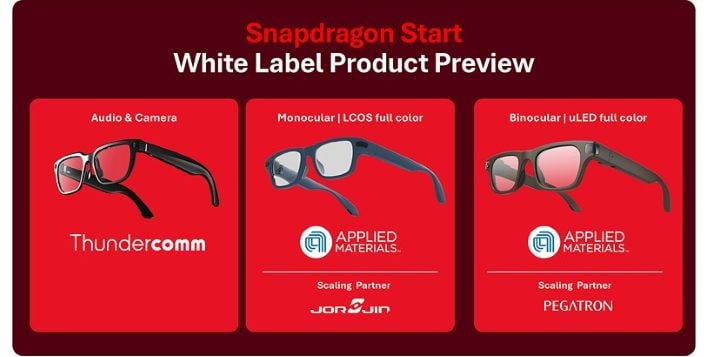
Snapdragon START (Scalable Turnkey AI-Ready Toolkit) is for brands that want to build personal AI devices faster, beginning with smart glasses. The idea is to package hardware modules, connectivity, and an AI-agnostic software stack with a manufacturing ecosystem so device makers can spend less time stitching together core components and more time designing the product itself. Qualcomm says the program is meant for consumer and enterprise brands as well as emerging innovators, with support for more form factors planned later this year.

The company is pitching START as a way to lower the barrier of entry for eyewear makers that want to move from concept to commercial product . Inspecs, the eyewear company behind brands like Barbour, CAT, Superdry, and O’Neill, is the first to collaborate exclusively with Qualcomm under the program.

The companion announcement, Snapdragon Reality Elite, targets the other end of the market, which is high-performance mixed reality headsets and optical-see-through glasses. Qualcomm says the platform is designed to deliver up to 48 TOPS of on-device AI performance and can run large language and vision models directly on the device. It's also aimed at improving the basics that often determine whether XR hardware feels futuristic or frustrating, including battery life, heat, tracking, and graphics performance.
The first devices using Reality Elite include XREAL Project Aura, with Qualcomm also naming Play for Dream as an upcoming adopter. That gives the platform an immediate home in Android XR, where Qualcomm is trying to establish itself as the silicon backbone for the category. The big takeaway here it seems is that Qualcomm doesn't just want to supply chips, but the entire scaffolding for where AI, glasses, and spatial computing are starting to converge.





