



Puget Systems Reveals 2025's Most Reliable PC Hardware, Do The Results Surprise You?


Puget Systems has released its 2025 Hardware Reliability Report: if you're familiar with the company's annual reports, they offer an invaluable look at which components in your build actually survive the rigors of professional use.
Around since the 2000s, Puget Systems' annual reports have been a cornerstone for workstation professionals who prioritize uptime as much as performance. One of the interesting bits in this year's findings is a marked stabilization in the processor market. For the first time in recent memory, the failure rates between Intel and AMD have narrowed to a near-dead heat: the Intel Core Ultra 200 Series clocked in at a 2.49% failure rate, while AMD’s Ryzen 9000 series followed at 2.52%.
Still, the individual crown for the most reliable consumer chip went to the Intel Core Ultra 7 265K, which boasted an impressive 0.77% failure rate. Puget's data suggests that Intel’s Arrow Lake architecture, combined with more conservative power delivery profiles, are what gave the chip a leg up here.
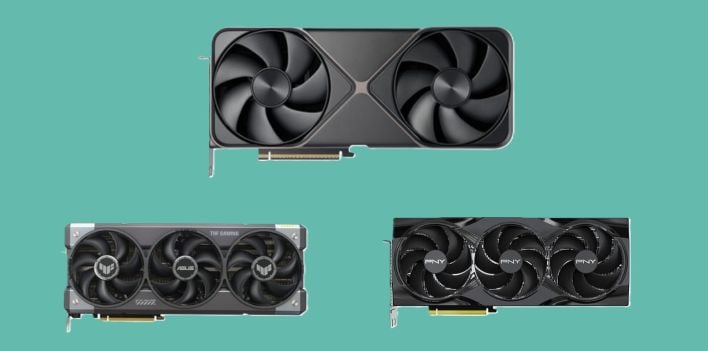
On the graphics front, NVIDIA has proven to be the gold standard. The GeForce RTX 50-Series Founders Edition cards emerged as the most reliable GPUs of the year with a low 0.25% failure rate. This is notable given the ongoing industry-wide scrutiny of power connectors; Puget found that NVIDIA's own cards largely avoided the thermal issues that occasionally plagued third-party partner boards. ASUS and PNY followed as highly reliable alternatives, maintaining failure rates well below 0.5%.

The most surprising perfect score comes from the storage segment. The Samsung 870 QVO 8TB SATA SSD achieved zero percent failure rate throughout the entire year. While NVMe drives like the Kingston KC3000 (0.22% failure) remain the speed kings, this data reaffirms that for massive, reliable data archives, high-capacity SATA drives are still the safest bet. Similarly, the Corsair SF1000 Platinum power supply recorded no failures in the small-form-factor category, but Puget notes that the scoring could be due to low production volume (due to supply issues) and may change as more are sold in 2026.
Elsewhere, components like Kingston ValueRAM DDR5-5600 (0.09% failure) and motherboards from the ASUS TUF and Gigabyte Aorus lines continue to serve as the unglamorous backbone for many workstations.
What makes these findings so valuable is Puget’s rigorous shop versus field tracking. Because every workstation undergoes an intensive burn-in process, the company catches roughly three-quarters of hardware defects before they ever reach a customer’s desk. This means the components highlighted in the 2025 report aren't just built better from the factory, they survived some real-world bashing as well.





