



Noctua Warns PC Builders That Cooler Clearance Specs Can Lie


Building a PC is not difficult, but it does require a series of checks for compatibility, including size and space constraints. This is especially true for small form factor (SFF) or mini-ITX builds. When it comes to cooling, whether a high-performance cooler clears the side panel or presses against the glass usually depends on the "Maximum CPU Cooler Height" printed on the case manufacturer's spec sheet, but according to Noctua, those official numbers are not always reliable.
In a technical blog post, Noctua reveals that it has been physically hand-measuring over 100 popular PC cases in-house. What the team discovered is that case manufacturers frequently underreport actual CPU cooler clearance, causing builders to settle for smaller, less capable heatsinks than their chassis can actually accommodate.
The difference in advertised versus real-world clearance metrics is not insignificant, either. Noctua's extensive testing indicates that the gap can be as much as 10 millimeters, which it discovered in Corsair's Frame 4000D. Corsair lists the clearance at 170mm, but Noctua found that there is actually 180mm of usable space.
In other cases, the difference is not so dramatic, but still notable. For example, NZXT lists 75mm of cooler clearance for its H2 Flow chassis, but Noctua measured it at 79mm. That extra 4mm means Noctua's popular 77mm -tall NH-L12Sx77 cooler actually fits, despite NZXT's documentation suggesting otherwise.
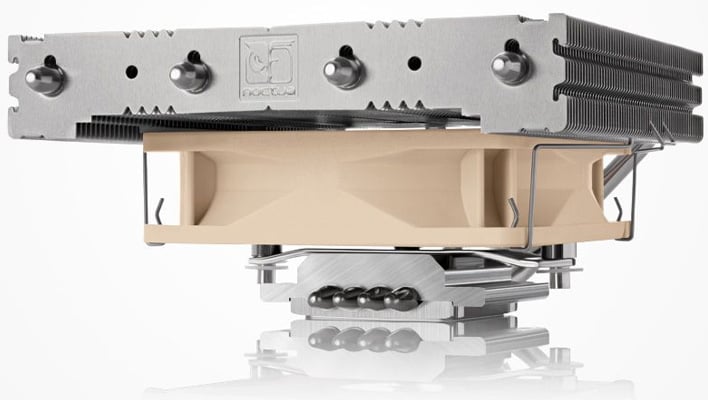
Another example Noctua shared is Thermaltake's RT100 case. According to Thermaltake, that chassis offers 68mm of cooler clearance, but Noctua's measurements showed 70.7mm. Even though that isn't much, it's enough of a difference to fit Noctua's NH-L12 Ghost S1 Edition, which is not obvious if going by Thermaltake's official measurement.
The primary issue is that case makers often build conservative buffers into their specifications to account for motherboard standoff variations, CPU socket heights, or manufacturing tolerances. While playing it safe prevents side panels from bulging, it also can lead buyers into downsizing their cooling setups unnecessarily.
The primary issue is that case makers often build conservative buffers into their specifications to account for motherboard standoff variations, CPU socket heights, or manufacturing tolerances. While playing it safe prevents side panels from bulging, it also can lead buyers into downsizing their cooling setups unnecessarily.
"On the flip side, in other cases, the actual clearance is slightly smaller than specified by the manufacturer, which can lead to even more severe problems, as you may opt for a cooler that may end up pressing against the side panel or not fitting at all," Noctua says.
Noctua observed this in the ASUS Prime AP201. ASUS lists that case with 170mm of cooler clearance, whereas Noctua found it to be 168.3mm.
"Another example of a case where we measured less clearance than specified is the recent Lian Li B4-mATX where we measured 164.5 instead of 168mm, which means that unlike the specifications suggest, the NH-D15 G2 does not fit this case," Noctua says.
So, what's a PC builder to do? First and foremost, research still matters. Unfortunately, inaccurate official measurements can still cause headaches, no matter how much research you put into components. To help, Noctua is maintaining a dedicated case compatibility database with its own accurate (presumably) measurements. So far, it has measured more than 100 cases and found 56 where there was a relevant deviation from the manufacturer's specifications.
Kudos to Noctua for taking this on.
Top Image: Measuring a PC case - Credit: Noctua




