



NASA's Swift Telescope To Plunge To Earth After Rescue Mission Fails


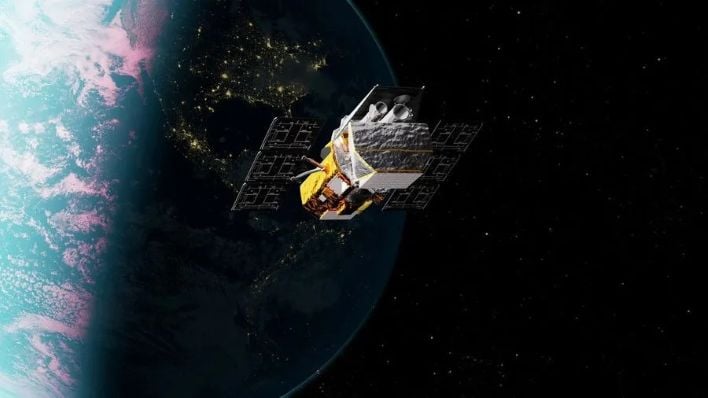
NASA and Katalyst Space Technologies officially called off the expensive Swift Boost mission after engineering issues crippled the rescue vessel. Launched in July, the Arizona-based startup's LINK craft suffered an "ongoing commercial spacecraft attitude control issue" that caused it to spin helplessly in orbit. Despite an attempt to re-establish control via software updates, persistent orientation and thruster problems made it impossible for LINK to safely dock with Swift and boost the observatory into a higher, safer orbit as originally intended.
After its 2004 launch, the $500 million Swift telescope spent over two decades serving as humanity's premiere early-warning system for high-energy cosmic explosions, particularly gamma-ray bursts. However, an intense surge in solar activity over recent years expanded Earth’s upper atmosphere, which generated extreme atmospheric drag that rapidly accelerated Swift’s orbital decay. Facing an impending reentry, NASA awarded Katalyst a $30 million contract to rapidly design, build, and deploy a robotic servicer—basically a glorified tow truck—capable of catching the falling satellite and extending its operational life by another decade.

Because Katalyst was given less than a year to execute the contract, NASA recognized the endeavor as a gamble. "NASA should be willing to move quickly and take smart risks when the potential return is worth it, and that is exactly what we did with this mission," stated NASA Administrator Jared Isaacman following the decision. "This is not the outcome we were working toward, but it does not change why this mission was worth attempting".
Rather than completely abandoning the mission, however, NASA and Katalyst are pivoting their goals. LINK will keep operating near Swift to attempt proximity operations and practice autonomous rendezvous techniques so that engineers can extract crucial technical and operational data from the encounter to refine future satellite servicing and debris-mitigation capabilities.
NASA has also confirmed that there is no secondary rescue plan, meaning that Swift’s scientific career is pretty much done. The observatory will continue gathering data on cosmic phenomena for as long as possible before eventually disintegrating in Earth's atmosphere.





