



MSI Claw 8 EX AI+ Debuts With Intel Arc G3 Extreme For June 23 Launch


This is thanks to its Intel Arc G3 Extreme processor, which should substantially outperform existing AMD Z2 Extreme-based handhelds. The only more-powerful options currently in existence will be those based on the AMD AI Max+ 395 and its Radeon 8060S iGPU, but since handhelds and laptops with that chip frequently exceed $2000, the price-point of the MSI Claw 8 EX AI+ seems compelling thus far.

In addition to better performance, MSI also touts out-of-box compatibility with Windows 11's new Xbox Mode (formerly Xbox FSE,) improved power efficiency, and better haptic feedback versus its predecessor.
Frame Generation support also gets an upgrade thanks to the Intel Arc G3 Extreme, which supports XeSS 3's Multi-Frame Generation functionality, which should help make it easier to target the VRR display's 1080p 120 Hz resolution and refresh rate. Aside from the new SoC architecture and a Void Purple colorway, though, we are looking at more of a refresh than a full-blown successor here, and that's fine.
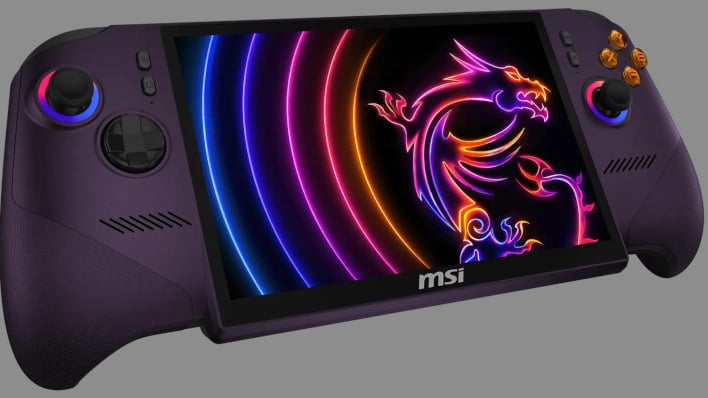
When Zak reviewed the previous-gen MSI Claw 8 AI+, he had high praise for the handheld's hall-effect triggers and joysticks, large 8-inch 1080p VRR IPS screen, and strong battery life.
Not only are those features carried over to the MSI Claw 8 EX AI+, but the handles have become noticeably more ergonomic and the bumpers are more seamlessly integrated with the triggers. Dual Thunderbolt 4 ports up top have also been maintained, making the handheld ideal for use with an eGPU, should you want to dock it to a larger desktop setup when at home.
Per the official MSI release, MSI Claw 8 EX AI+ will support up to 32GB LPDDR5X and launch with Intel Wi-Fi 7 and Bluetooth v6 support, like its predecessor. A microSD card reader for storage expansion is also carried over from the last-gen handheld, but new to the MSI Claw 8 EX AI+ is support for full-sized M.2-2280 NVMe Gen 4 SSDs, which should make upgrades easier and more affordable than with the smaller M.2-2230 drive of its predecessor.




