



Microsoft Says Its New AI Hubs Slash Water Use To Restaurant Levels


The AI expansion explosion has been colliding with environmental limits, forcing tech giants to rethink the massive resource footprints of their infrastructure. At the Microsoft Build 2026 conference, CEO Satya Nadella claimed that the company's newest AI data centers solve the problem by using as much water annually as a single restaurant.
This development would mean a 180-degree turn from traditional hyperscale facilities, which historically rely on evaporative cooling systems that continuously burn through tens or hundreds of millions of gallons of water each year. And it's not just talk—so far, the revised infrastructure is currently on display at the company’s 315-acre Fairwater campus in Mount Pleasant, Wisconsin.
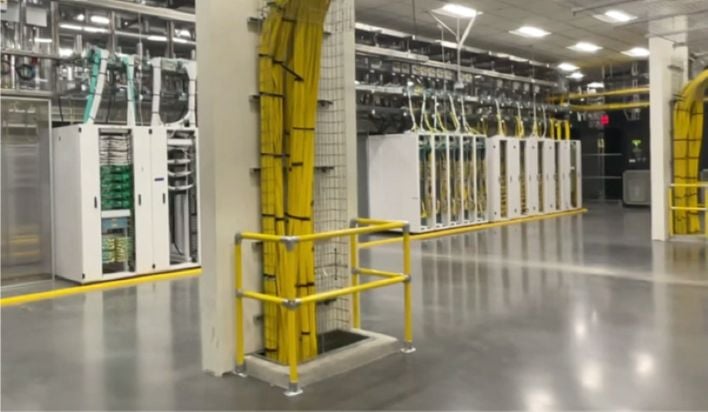
Part of what makes Microsoft's new setup work is a transition to a two-story vertical design. Rather than spreading hardware across sprawling warehouse floors, Microsoft is stacking GPU racks in three dimensions. More importantly, the vertical design alters how the facility handles heat.
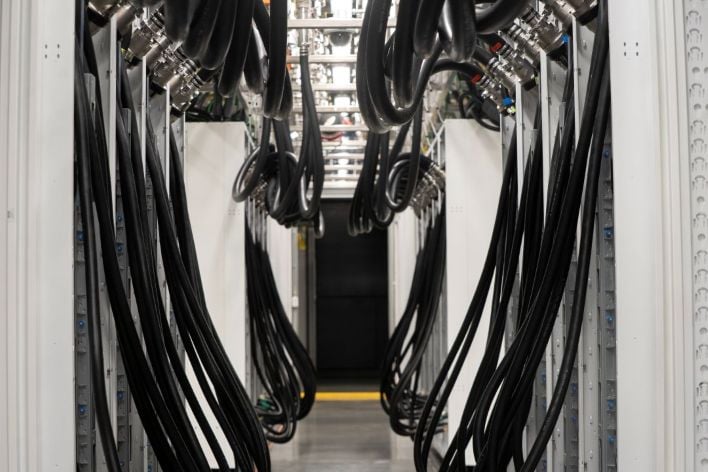
Microsoft engineers fill the data center's internal cooling loop just once during construction. The water then continuously recirculates through a closed-loop cooling system just like that of a car or a water-cooled PC. The heat absorbed from the AI hardware is routed to a massive chiller plant where large fans dissipate the energy before recycling the water back into the facility. Outside air is utilized for the vast majority of the cooling, meaning additional fresh water is pulled from local municipal supplies only during periods of extreme heat.
However, the restaurant-level data center model is still a ways off from Microsoft’s current infrastructure. The closed-loop architecture is currently limited to the Fairwater facility and select identical sites presently under construction across the United States. Because Microsoft has not announced a comprehensive retrofit program for its hundreds of existing, older data centers, the vast majority of its active global network continues to operate on traditional, water-intensive cooling models.
Baby steps, we suppose.





