



Is 16GB Enough? Microsoft Says 32GB is the 'No Worries' Sweet Spot for Windows Gaming


We're way past the days of wondering if 640 kilobytes of memory is enough. The discussion in the modern era is if 16 gigabytes will suffice for a gaming PC, and according to Microsoft, that amount is considered the baseline. The sweet spot, however, is 32GB. For those of you who can swing that amount of memory in today's economy, 32GB is the "no worries" upgrade for gaming in Windows.
It's one of several bits of guidance outlined in a Microsoft blog post detailing "what the best Windows PC gaming systems have in common" and what specifications you should shoot for when building, buying, or upgrading a modern PC.
"For most players, 16GB RAM is a practical starting point. Moving to 32GB RAM helps if you run Discord, browsers, or streaming tools alongside your games. That extra memory also gives newer titles more breathing room as memory demands continue to rise," Microsoft explains.
It's a sound recommendation from our vantage point. Even for general purpose computing, we recommend against buying or building a system with just 8GB of RAM these days. You can still get by with 8GB of memory if you really must, but 16GB or more lessens the chance of running into memory-based performance hiccups. Even Apple, which has notoriously been stingy with its baseline memory and storage options, has almost exclusively moved to 16GB as the starting point.
The MacBook Neo is the obvious exception, and while it's proven a capable machine, there are instances where the RAM configuration holds back Apple's most affordable MacBook to date.
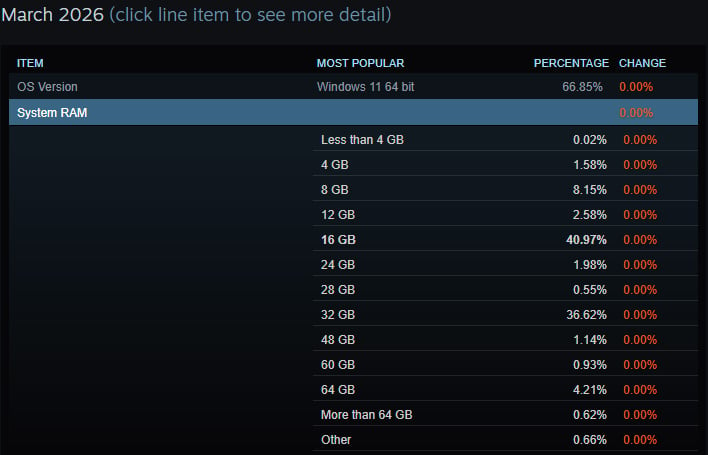
Microsoft is not being controversial in calling 16GB the baseline and 32GB the "no worries" upgrade for gaming, not unless you want to argue that 64GB is the true worry-free capacity. A quick peek at Steam's latest hardware survey, for example, shows that 40.97% of gamers pinged are running 16GB of RAM and 36.62% have 32GB. The next most popular capacity is 8GB, at 8.15%.
Even so, Microsoft's guidance comes at a time when the market is shambles due to an AI-driven feeding frenzy on hardware. Memory prices have shot up in recent months, especially for DDR5. Generally speaking, 32GB of DDR5 memory will set you back $350 or more, with many 32GB DDR5 memory kits now priced north of $400.
The rest of Microsoft's guidance, as spotted by Windows Latest, is generally sound though mostly vague. For example, when it comes to the CPU, Microsoft talks about the benefits of multi-core processors and says you should aim for a CPU that is "powerful enough for your target FPS." And for the GPU, Microsoft's advice is to invest in a current-generation model that "matches your monitor's resolution and refresh rate."




