



Sony's Lead PS5 Architect Discusses Frame Generation Plans For PlayStation


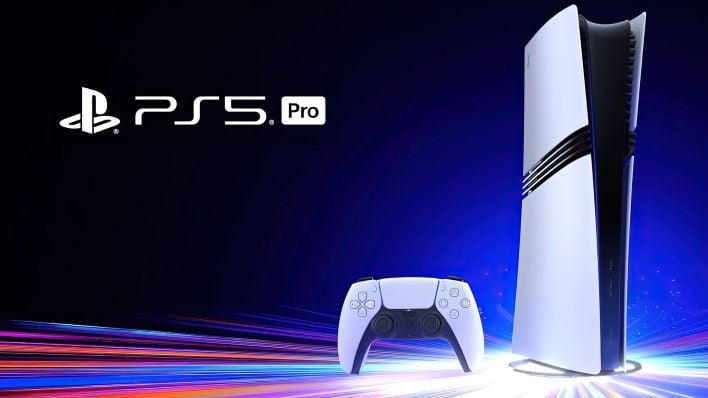
Sony’s lead systems architect, Mark Cerny, has confirmed that AI-powered frame generation is indeed on the roadmap for PlayStation hardware, stressing that the feature isn't yet ready for prime time in 2026. While the PlayStation 5 Pro recently introduced a PlayStation Spectral Super Resolution (PSSR) 2 upscaler that gave the APU a chance to shine, Cerny’s latest comments indicate that the company is looking beyond resolution bumps toward AI actually constructing new animation frames.

During a recent deep dive into the evolution of PlayStation hardware with Digital Foundry, Cerny acknowledged that while PSSR was the first major step into the AI arena for the company, frame generation is the logical next phase. He noted that the technology "should be seen at some point on PlayStation platforms," though he remained cautious about specific timelines. This seems to imply that the full suite of AI-driven performance boosts might be a multi-generational project, perhaps something we'll see in the PlayStation 6.
Now, frame generation uses machine learning (ML) and artificial intelligence (AI) algorithms to analyze two sequential frames and insert a synthetic frame between them. This effectively doubles the perceived smoothness of a game, lifting a load off the GPU. In the PC space, this technology has been popularized by NVIDIA’s DLSS 4 and AMD’s FSR 4, but bringing a proprietary, hardware-level equivalent to a closed console ecosystem brings its own set of unique challenges.
Frame generation on consoles is particularly tricky due to input latency. When a console generates a synthetic frame, that frame doesn't exist in the game’s logic; it's a visual interpolation, which can lead to a floaty feel whereby the game looks like it is running at 60 or 120 frames per second, but responds with the delay of a 30-fps title. Sony’s approach, much like its development of PSSR, is expected to focus on a hardware-accelerated solution that minimizes this lag, likely utilizing the dedicated AI hardware found in its newer custom silicon.
Currently, players are often forced to choose between stunning 4k visuals at 30 fps or a blurrier image at 60 fps. AI frame generation would theoretically allow a game to render natively at a lower base, use PSSR to sharpen the image, and then use frame generation to push the output to, say, 120 fps.
Photo credits: Sony





