



Is The Ryzen 9 9950X3D2 Going To Be AMD’s New Performance King?


Obviously, this part is going to be expensive, but it's justified by being AMD's new highest-performing desktop CPU, right? Well, maybe yes, maybe no. AMD's Jack Huynh calls it exactly that in the video where he introduces the chip, and in certain workloads (complex tasks sensitive to memory latency) it will absolutely crush any competition with its fat stacks of cache. Just take a look at the benchmarks that AMD provided to see some use-cases where the extra cache on the Ryzen 9 9950X3D2 allows it to dominate:

However, there are plenty of other workloads where it may not even outperform the standard Ryzen 9 9950X, so let's talk about how that's possible. First, we need to look at the specifications: Sixteen Zen 5 CPU cores, a turbo clock of 5.6 GHz, and a TDP of 200W. That's a 100-MHz drop in peak turbo clocks compared to the Ryzen 9 9950X along with a 30W bump in TDP, precipitated by the fact that all that extra SRAM still consumes power and produces heat, especially considering that SRAM has markedly high standby leakage current versus logic area.
When you consider the slight drop in boost clocks as well as the increased power draw (and thus heat output), it becomes entirely plausible that the Ryzen 9 9950X could sustain higher boost clocks under a full 16-core load than the new processor. That won't make up for having 1/3 the L3 cache in workloads sensitive to latency, but in predictable, prefetchable, and highly throughput-sensitive workloads—things like media compression, high-throughput packet processing, and some types of big data analytics—it can result in superior performance, especially if cooling is marginal and the non-X3D CPU is using speedy RAM.
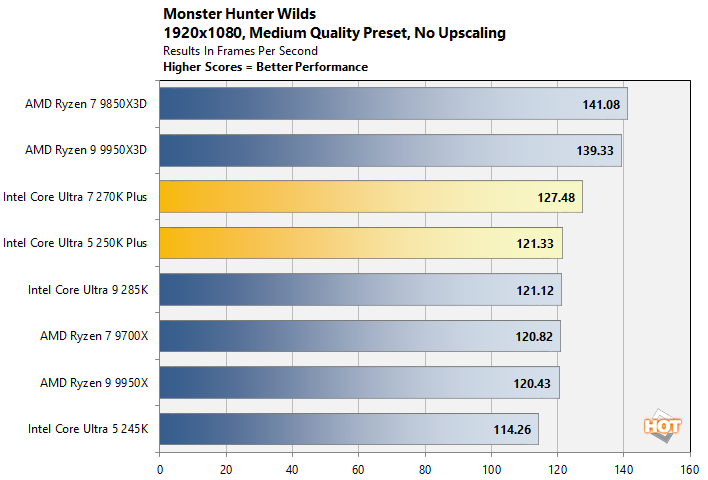
There's also the gaming case to talk about. Put simply, there's no reason to expect that the Ryzen 9 9950X3D2 Dual Edition will offer superior gaming performance versus the extant "Zen 5" X3D processors. In fact, it's very likely that the Ryzen 7 9850X3D will continue to be the fastest gaming CPU on the planet, as it's not possible for that chip to run into inter-CCD communication latency issues, since it only has one.
Now, with that said, if you're running a lot of background tasks (like, say, talking on Discord, streaming to Twitch, listening to Spotify, and running a vtuber model) while gaming, you definitely might benefit from the extra CPU cores. But even in that case, you would still likely see the same performance from an extant Ryzen 9 9950X3D, which only has 3D V-Cache on one of its CCDs and can run higher clocks on the other CCD.
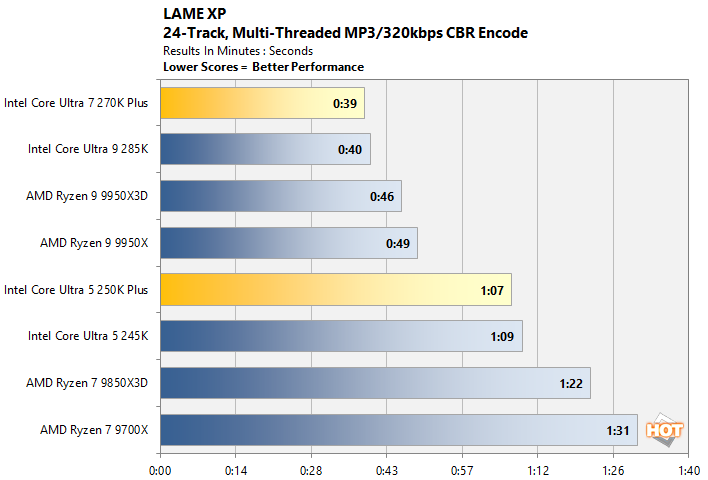
This is absolutely not to say that the Ryzen 9 9950X3D2 Dual Edition will do anything besides completely crush these tasks. In no case will it be more than a scant few percentage points behind any other processor, with the possible exception of comparing it against the new Intel Core Ultra 7 270K Plus in exactly the kinds of throughput-sensitive multi-core workloads we were discussing earlier in the context of the Ryzen 9 9950X. Even in that case, we're talking about two unbelievably fast CPUs for the workload; while one might beat the other in a given test, they're both going to be near the top of nearly any given chart, whatever the order.
That comparison is brought into sharp relief by the likely disparity in pricing between the processors. AMD hasn't announced a price for the Ryzen 9 9950X3D2 Dual Edition yet, but it can't be cheaper than the Ryzen 9 9950X or Ryzen 9 9950X3D, both of which typically sit north of $600 US (although the Ryzen 9 9950X is down to just $514 right now, which is a heck of a deal on a damn fast CPU.) Intel is asking $299 for the Core Ultra 7 270K Plus, and while it absolutely won't compete with any X3D processor in games, if you're considering the Ryzen 9 9950X3D2 Dual Edition for productivity work, you may want to wait for third-party reviews before making your decision.





