



Is Switch 2 Getting A Price Hike? Here's What Nintendo's President Had To Say


Believe us when we say we're as tired talking about price increases in the consumer sector as you are of hearing about them. Unfortunately, the reality is we're collectively navigating unprecedented waters with uncertainties stemming from tariffs, an AI-driven surge in memory and storage demand, and other factors that are driving up the cost of consumer electronics, especially in gaming. Will the Switch 2 be the next domino to fall, so to speak? Nintendo President Shuntaro Furukawa addressed the topic in a recent interview, though the answer remains unclear.
For context, price hikes have hit the console market pretty hard over the past year. Pricing for PlayStation and Xbox hardware have gone up, and same goes for Nintendo's first-generation Switch consoles. Making the pill even tougher to swallow is the fact that the PS5 and Xbox Series X|S were both released a little over five years ago.
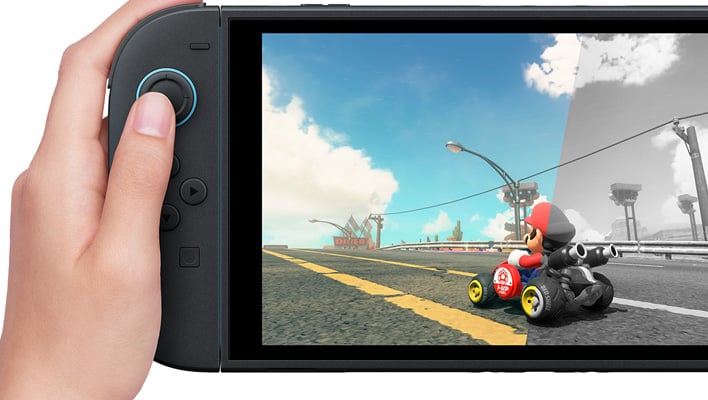
Meanwhile, the Switch 2 debuted at $449 for the standalone console and $499 for a Mario Kart World bundle. To put those prices into context, the Switch launched at $299 and the upgraded Switch OLED with a better display and twice the storage debuted at $349. So from that vantage point, the Switch 2 is already starting out from higher ground. Could it go even higher?
In a paywalled interview with Kyoto seen by VGC, Furukawa talked about the challenges Nintendo faces in keeping prices where they're currently at, and they're the same challenges Sony, Microsoft, and every other hardware maker are facing, which is balancing challenging conditions with profit margins.
"Hardware profitability depends on factors like component procurement conditions, cost reductions through mass production, and the impact of exchange rates and tariffs,” Furukawa said (via machine translation).
Furukawa explained that Nintendo has been procuring parts based on its medium and long-term business plans, but noted that the "current memory market is very volatile."
"There is no immediate impact on earnings, but it is something we must monitor," Furukawa said.
When asked point blank if Switch 2 pricing would go up if procurement costs rise, he was non-committal, saying he can't comment on hypothetical situations. He did, however, say that it's "difficult to gauge the future impact" and that Nintendo's business strategy has been to incorporate tariffs into its pricing model "as much as possible" in the U.S .and abroad.
"On the other hand, this is a crucial period for our game business as we promote the adoption of new hardware and maintain the momentum of our platforms. We are working on this while carefully considering the situation," Furukawa said.
Boiling down his comments into a tl;dr version, the answer to whether Switch 2 pricing will go up is a resounding 'Maybe'. For now, the Switch 2 remains $499, and you can still find the Mario Kart World bundle for $499.




