



Intel Expands Ireland Chip Plant With $5.7 Billion AI Manufacturing Push


Intel is pouring $5.7 billion into its Leixlip campus in Ireland to expand operations for its next phase of manufacturing, part of which includes scaling capacity to deliver Xeon 6 and next-gen Xeon processors built on its Intel 3 node. More immediately, the big capital investment expands the site's current production output as global demand for AI sparks an industry-wide buying frenzy.
It's not just about capacity expansion, though. Intel's investment will go towards upgrading existing fabrication facilities and installing cutting-edge equipment for future chip production. Intel's also hoping to advance research and development activities, and strengthen Europe's semiconductor supply chain.
"By investing in our existing fabs with state-of-the-art technology and installing cutting-edge tools, we are not just increasing output of critical products like Xeon 6 and next-gen Intel Xeon processors built on Intel 3, we are ensuring that Ireland remains at the forefront of the world’s most advanced manufacturing ecosystems, while strengthening the region’s role in the global technology landscape," Intel's Naga Chandrasekaran said in a statement.
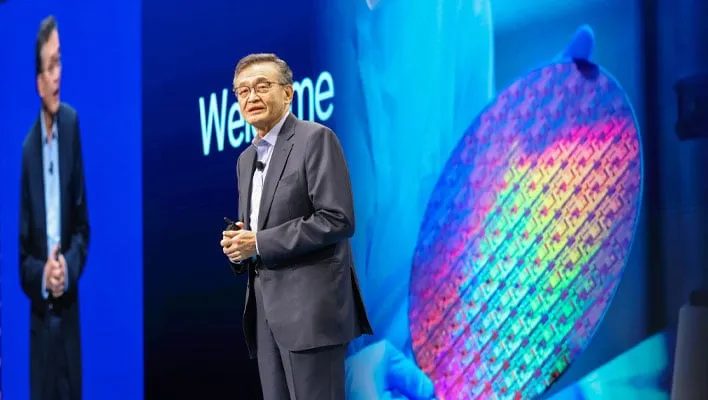
Intel has invested heavily into its foundry business, both when Pat Gelsinger was at the helm and now under the leadership of Lip-Bu Tan, who took over as CEO nearly a year and a half ago.
It was also right around this time a year ago when Tan promised investors a more disciplined foundry play while reporting an earnings beat for the second quarter of 2025.
"We are laser-focused on strengthening our core product portfolio and our AI roadmap to better serve customers. We are also taking the actions needed to build a more financially disciplined foundry. It’s going to take time, but we see clear opportunities to enhance our competitive position, improve our profitability and create long-term shareholder value," Tan said at the time.
Intel's ongoing investments in Ireland since establishing operations in 1989 have approached $35 billion. The Leixlip campus, which employs 4,900 people, is one of Intel's most advanced sites, and obviously an important one as it battles competing semiconductor manufacturing giants TSMC and Samsung.




