



Google Play Policy Change Puts Android Devs On Notice Over Battery Drain


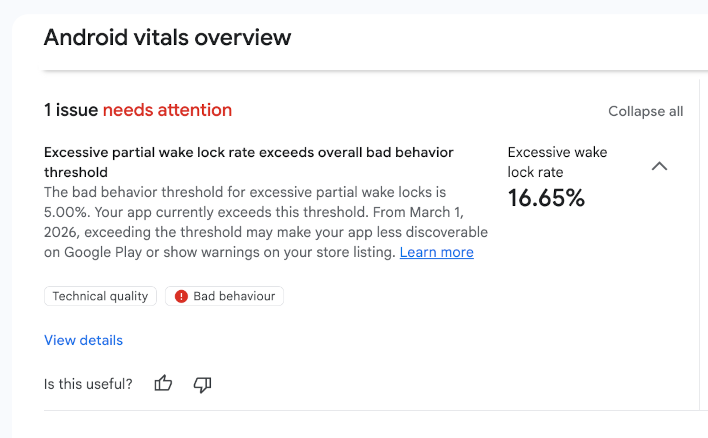
Excessive wake locks refer to when an application "holds more than 2 cumulative hours of non-exempt wake locks in a 24 hour period," with the exception of audio playback or user-initiated data transfers. A wake lock refers to when an application prevents the device from putting it to sleep so it can continue running its functions in the background, so this should cut down on applications that regularly abuse the function without user knowledge. Fortunately for developers, Google has also updated the developer documentation on wake locks to make it easier for developers to update their applications to spec without running afoul of the new flagging system.
Those developers do still need to act quickly, though. The Play Store will begin flagging these applications on March 1st, 2026, and when that happens, a warning about the app's battery usage will be displayed on the Play Store listing for users who find the application. But users even seeing that warning will become less likely, since the impacted applications will also have their visibilities limited, including being removed "from prominent discovery surfaces such as recommendations."
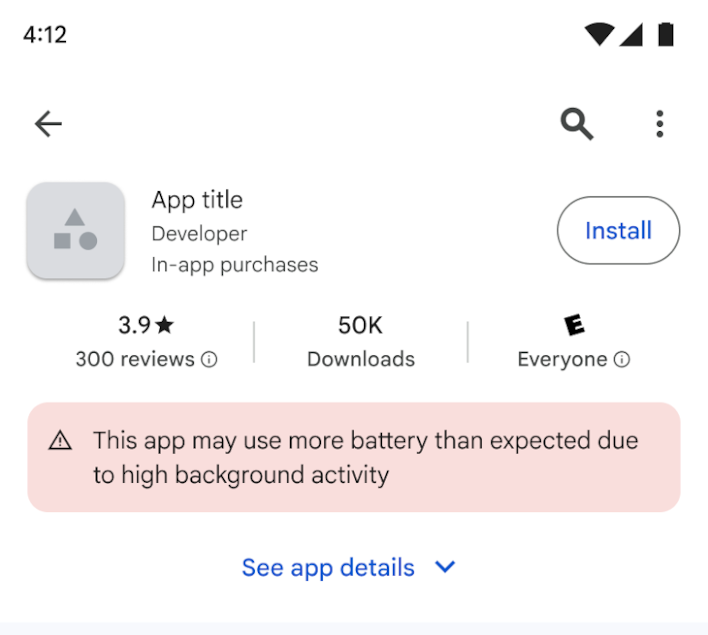
So, the Play Store ecosystem is set to change in a big way very soon. Applications will now be expected to optimize around wake lock metrics, as well as excessive battery usage in general and high user-perceived crash and ANR rates. Applications in violation of one or more of these flags will have their visibility limited and flagged for bad behavior, so success on the Google Play Store will require developers to meet a higher bar for optimization if they want to stay in Google's good graces. Per the original blog post, this is an initiative meant to "improve the experience for your users across the entire Android ecosystem". Combined with the November update for Google Pixel devices, this shows a real initiative on Google's part to improve Android battery life and optimization across-the-board.
Image Credit: Google




