



Google Is Pulling The Plug On Dark Web Reports And Here's Why


Bah, humbug! Another Google tool has just been sunsetted, as Scrooge McGoogle has announced the immediate wind-down of its 'dark web report' feature, a free tool designed to alert users when their personal information is compromised and found circulating in illicit corners of the internet. While it wasn't a particularly proactive/reactive tool for users, at least the information was located in one easy location. For those missing the feature, there are, thankfully, alternatives.
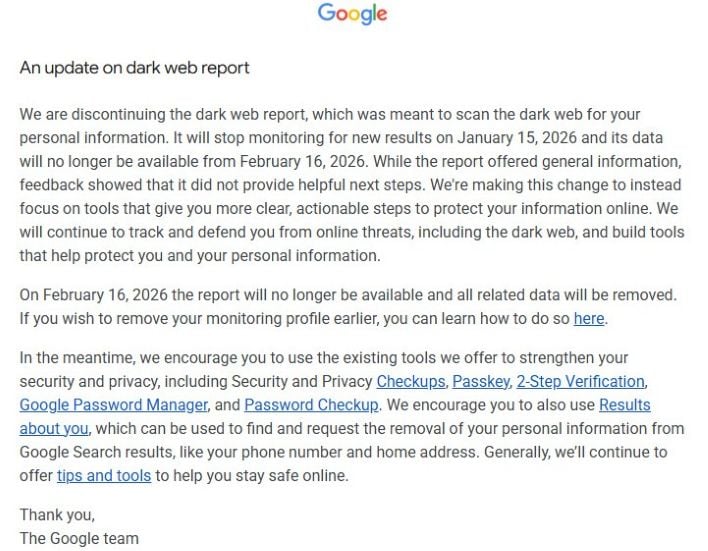
Initially rolled out exclusively to Google One subscribers before being made freely available to all users in mid-2024, dark web report provided a consolidated view of leaked personal identifiable information (PII). Users who opted into the monitoring profile receive notifications if sensitive data, such as their name, email address, or phone number, appeared in data dumps sold or shared on the dark web.
The premise was straightforward: knowledge is power, and knowing your data was exposed should prompt protective action. However, the search giant's decision to retire the tool stems from a critical flaw: a lack of utility once the breach was discovered. In an official notice, Google stated that user "feedback showed that it did not provide helpful next steps," suggesting that the reports often left users informed but paralyzed.
Google confirmed that it will cease monitoring for new dark web results on January 15 of next year, and access to all historical report data will be purged from user accounts on February 16. According to the announcement, the company is now pivoting its efforts towards building more integrated defenses that immediately suggest solutions rather than just raising alarms. Why didn't the Google just rebuild a dark web report 2.0, though?
Good question. Anyway, for users concerned about their privacy and exposed credentials, Google recommends utilizing several existing, and supposedly more actionable, internal tools (prevention is better than cure, see). These include the Security Checkup, which offers guided steps for strengthening account defenses; Google Password Manager and its associated Password Checkup tool, which identifies and flags weak or compromised login details; and the push toward adopting Passkeys for streamlined, phishing-resistant sign-ins.
Furthermore, the 'Results about you' tool, which allows users to find and request the removal of their PII from standard Google Search results, remains available for broader digital hygiene.





