



Here's Your Free Virtual Ticket To Computer History Museum's Entire Collection


For those who can't make the trip to Mountain View, California to the actual Computer History Museum, OpenCHM is the next best thing. The Computer History Museum's catalog of photography, video, software, and text entries allows anyone to get educated on the history of computers and gain a deeper understanding of today's electronics. Alongside the Internet Archive (and its Wayback Machine), which hosts a staggering volume of old games, software, and other media, OpenCHM's fully-digitized catalog has made computing history easily accessible.

On the hub page of OpenCHM, there are four collections: Curator Picks, Stories From The Collection, Highlights, and Discovery Wall.
Curator Picks has six sections and focuses on key historical items from each, including: Human Computer Interaction (input/peripherals/displays), Video Games (consoles/PC), Vintage Marketing, Community Memory (archived forums), 'Computers and Music', and a dedicated Personal Computers section. What you'll find in Curator Picks can range from truly archaic peripherals, like the 1968 Sutherland Head-Mounted Three-Dimensional Display pictured below, or complete box-and-manual copies of nostalgic games like Ready 2 Rumble Boxing (1999, PS1) or Doom II (1994, PC).
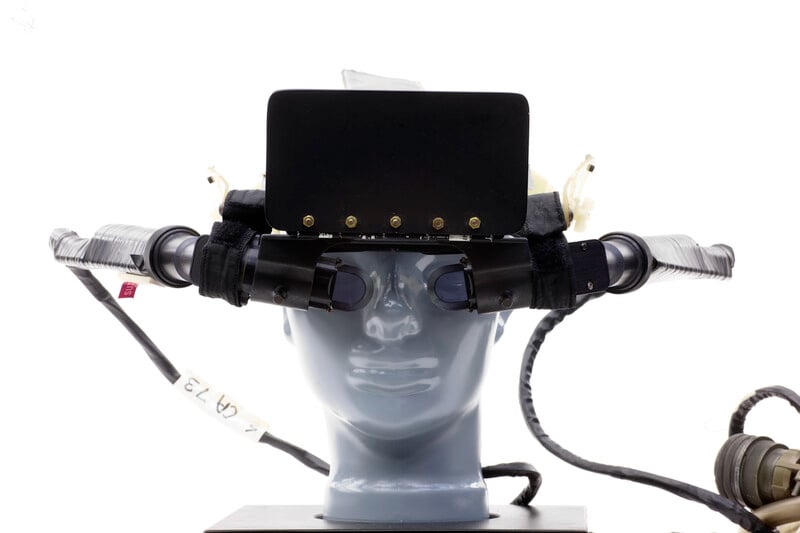
Stories From The Collection is more narrative-focused, and currently features a set of three articles. They are titled "Becoming Silicon Valley, 1945-1960", "Trailblazers and Change Agents", and "Math Whizzes and Computing Pros", with the latter two focused on telling individual stories of prominent figures in computing. The Silicon Valley piece gives an extended origin story for today's epicenter of tech, including photos and stories tied to key products.

Finally, Highlights and Discovery Wall are two of the most straightforward aspects of OpenCHM. Highlights is self-explanatory; it is composed of "the most famous, interesting, and rare items in the collection". Meanwhile, Discovery Wall is "a dynamic showcase" of the specific photos that have been most-viewed and "Liked" by other viewers of the Catalog. If you'd like to influence the Discovery Wall for yourself, or just peruse the whole CHM archive, the OpenCHM Catalog page is publicly-accessible here.
OpenCHM isn't just a Catalog, though—it also allows for advanced search, save, and highlight functionalities. There's even a developer portal for API access and sample code, per the original CHM press release. We have to applaud Computer History Museum for its work bringing its archive online, and of course, its long work since 1996 preserving the history of computing.
Image Credit: Antony-22 (CC 4.0 International License) for header/thumbnails, Computer History Museum for content images




