



Claude AI Reviewed An MRI And Challenged A Doctor's Diagnosis, Can It Be Trusted?


Antoine's situation started with a few weeks of right shoulder pain, a visit to an orthopedist, and a follow-up MRI at the same clinic. The radiologist's finding was a Grade III partial-thickness tear at the apical insertion of the subscapularis tendon, a diagnosis that came with an aggressive, same-day treatment plan. Antoine noted he was skeptical before he even left the building. It's a reaction that's becoming more common. Everyday people are already using AI tools to tackle medical problems in ways that have surprised the scientific community, and Finkelstein's shoulder MRI experiment fits squarely into that emerging pattern.
Before turning to Claude, Antoine also asked GPT 5.5 Pro to review the clinic's proposed treatment plan. According to him, the model questioned two aspects of the recommendation: the use of shockwave therapy despite guidance that generally discourages it for non-calcific rotator cuff disorders, and the inclusion of Traumeel, a homeopathic injectable marketed in Germany. Those responses prompted him to investigate the MRI itself more closely.
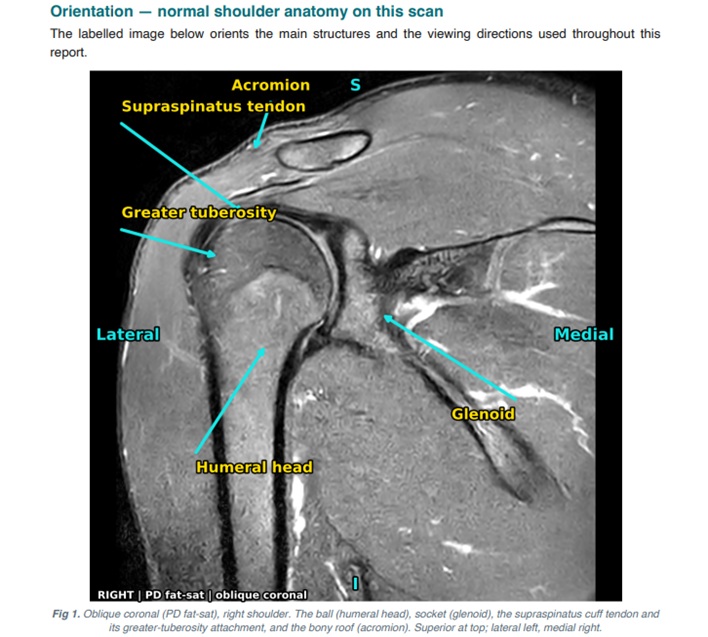
For the MRI analysis itself, the software developer chose Claude Code running Opus 4.8 rather than a standard chat interface, and in his view the distinction is significant. The tool's ability to execute code, install packages, and iterate programmatically made the workflow meaningfully more capable, he argued, than simply pasting text into a chat window. Antoine uploaded a 266MB DICOM package containing several hundred raw image files and gave the model a single, sparse prompt: "right shoulder pain for 2 to 3 weeks." That was it. After roughly an hour of processing, Opus produced a report concluding that the tendon appeared intact, contradicting the radiologist's assessment of a Grade III partial-thickness tear.
That gap was wide enough to warrant a second phase. Antoine initiated what he called an arbitration, feeding Opus the human radiologist's report alongside notes from his earlier GPT 5.5 Pro conversations. The model approached the comparison using multiple subagents to limit context bias, working through the competing interpretations methodically before producing a second assessment. With moderate-to-high confidence, it sided with its own earlier read: mild insertional tendinosis, and no identifiable tear.
Where does a discrepancy that significant leave someone? Antoine is honest on his thoughts on the subject. He says there is a certain comfort in deferring to a credentialed expert, and AI has a way of fracturing that comfort without fully replacing it. He acknowledges that both the clinic and the model could be wrong, that he may have miscommunicated something, and that none of this constitutes medical advice.
Still, the tension is real. As previously reported, Claude Code operating autonomously on high-stakes tasks can produce consequential results in either direction, whether that's deleting a company's entire production database in nine seconds, or, in this case, returning a medical read that flatly contradicts a trained radiologist.
What Antoine's experiment does represent is a genuinely interesting case study in AI-assisted agentic workflows applied to a personal, high-stakes context. The technical takeaway is arguably the most durable point. The gap between a conversational AI interface and a tool like Claude Code, where the model can write, run, and debug its own analytical code, is substantial. For tasks requiring iterative analysis of complex file formats, that distinction is the difference between a rough approximation and something resembling a structured methodology.
The broader capability curve is moving fast. Anthropic's own data shows the length of complex tasks Claude can reliably complete on its own has been doubling roughly every four months, with Opus 4.6 already handling jobs that would take a human up to 12 hours. Antoine closes with a reasonable hope. He believes that in a few model generations, trusting AI to review medical imaging might feel as routine as trusting it to catch a typo. Whether medical imaging reaches that point remains to be seen, but the pace of improvement in agentic AI suggests the conversation is moving much faster than it was even a year ago.





