



ASRock's New Radeon RX 9070 XT Taichi White Has A 2-Inch LCD And 3.1GHz Boost Clock



Besides the white colorway and controllable RGB, the card also features gold trimmings, like other high-end gaming graphics cards from ASRock. The ASRock Taichi White AMD Radeon RX 9070 XT is 330mm long, 140mm high, and a 67mm wide. The box includes a GPU support stand, and a 16-pin to triple 8-pin power converter, in addition to the obligatory manual. The triple-slot, triple-fan GPU supports dual-BIOS functionality and has a healthy boost clock of up to 3100 MHz, in line with its Black counterpart.
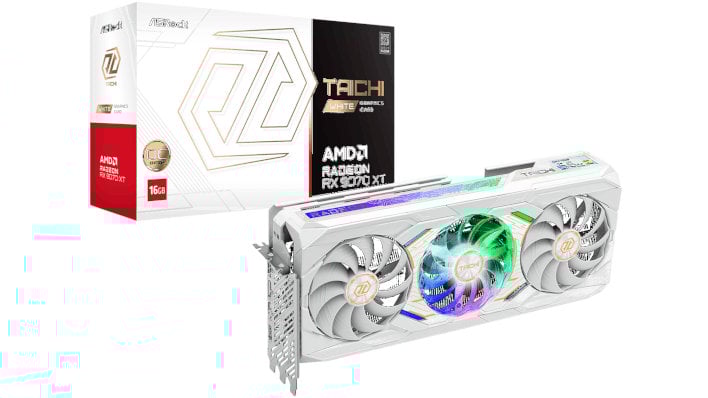
Overall, it's a pretty beefy-looking card, and a great fit for prospective AMD GPU fans building a white PC. If you want the best AMD's RDNA 4 architecture has to offer and a strong performance-per-dollar candidate, this should be a good fit--if the card is actually priced in-line with expectations. At time of writing, the card isn't currently listed anywhere but ASRock's site, where it warns that "This model may not be sold worldwide."
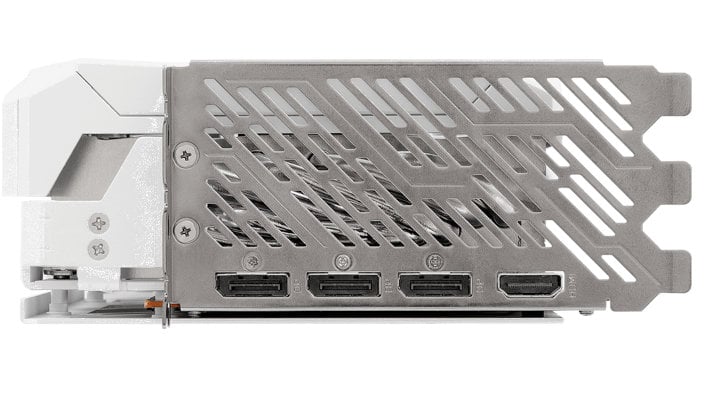
As long as you aren't adherent to vertical mounted GPUs, the ASRock AMD Radeon RX 9070 XT Taichi White 16GB and its integrated 2-inch LCD panel should be a good fit for your build. Being able to identify GPU temperature at a glance without the need for an extra software window open is a nice bonus—though if you don't mind getting more granular with, say, an RGB setup that color-shifts according to temps, there's no need to pay a price premium for a card like this.




