



Apple's Mac Mini A12Z Developer Transition Kits Arrive As Intel Exodus Takes Shape


There are a number of reasons that have been cited for the shift:
- Intel's processor roadmap has been fraught with delays
- Apple is looking to bring more chip design in-house
- Apple feels that its "Apple Silicon" will offer higher performance-per watt that competing solutions
- There could be substantial cost savings by using its own processor designs
To aid in that transition to its own processor built using Arm architecture, Apple announced the Developer Transition Kit at WWDC 2020. These hardware kits will allow developers to begin building native apps that will offer the best performance with the next generation of Macs that are on the horizon.
How many new transition kits would fit in the old transition kit? pic.twitter.com/mG0iTkJ4cY
— Adrian Thomas 🇪🇺 (@adrianthomas) June 29, 2020
Developers who got their orders in early last week are starting to receive the systems, and as promised, they are based on the venerable Mac mini chassis design. But rather than having an Intel-based Core processor inside, the Developer Transition Kits are powered by the potent Apple A12Z Bionic chip that is found in the 2020 iPad Pro.
The A12Z Bionic is an Arm64 design with four performance "Vortex" cores, and four efficiency "Tempest" cores. The only difference between the A12Z Bionic and 2018's A12X Bionic is that the former has 7 GPU cores for slightly better graphics performance instead of 6 GPU cores. While the A12Z Bionic in the iPad Pro is paired with 6GB of LPDDR4X RAM, the Developer Transition Kits comes with a more generous 16GB. In addition, they feature a 512GB SSD.

However, it's unlikely that the A12Z Bionic will ever make an appearance in upcoming production Mac hardware and will be relegated to developer-only duties. This is similar to the old transition kits that were used in the PowerPC to Intel transition, which used old-school Pentium 4 processors, while production systems used Intel's next-generation Core family of processors. Instead, it’s rumored that the first Arm Macs – which could be a 13-inch MacBook Pro and a 24-inch iMac – will be powered by a new 12-core processor. The processor is said to integrate 8 “Firestorm” performance cores and 4 “Icestorm” efficiency cores.
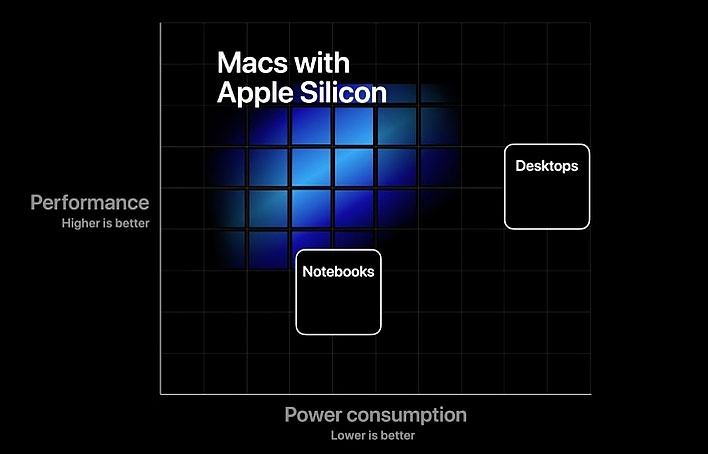
Despite the announcement of its in-house processors, the transition period from when the first Arm Macs ship until its entire lineup is running on Apple Silicon will take two years. That means that there will still be new Macs announced with Intel processors between now and then. However, unless customers truly need the compatibility of x86 processors (a la for Windows Boot Camp support), it's likely that most customers will avoid these "legacy" systems in favor of the new Apple Silicon for the compatibility perks (like the ability to run iPhone and iPad apps) and the performance benefits that they will allegedly bring.




