



Apple Posts Monster $143.8 Billion Quarter Driven By Record iPhone Sales


Apple's financial results for its fiscal 2026 first quarter shattered expectations, with revenue skyrocketing to a $143.8 billion, up 16% from the same quarter a year ago. It ranks as Apple's best quarter in the company's nearly 50-year history, and it's thanks in large part to record demand for iPhone devices.
"iPhone had its best-ever quarter driven by unprecedented demand, with all-time records across every geographic segment, and Services also achieved an all-time revenue record, up 14% from a year ago. We are also excited to announce that our installed base now has more than 2.5 billion active devices, which is a testament to incredible customer satisfaction for the very best products and services in the world," Apple CEO Tim Cook said in a prepared statement.
While Apple doesn't break iPhone sales down by model (Apple launched the iPhone 17 and iPhone Air in September 2025), it did highlight that overall iPhone sales tallied more than $85 billion, compared to $69.1 billion in the same three-month period from a year ago. Meanwhile, Mac sales dipped slightly year-over-year from $8.99 billion to $8.39 billion, while iPad sales increased from $8.1 billion to $8.6 billion. Apple's 'Wearables, Home And Accessories' categories added another $11.5 billion to the tally, compared to $11.7 billion last year. Finally, Services grew from $26.34 billion to a little over $30 billion.
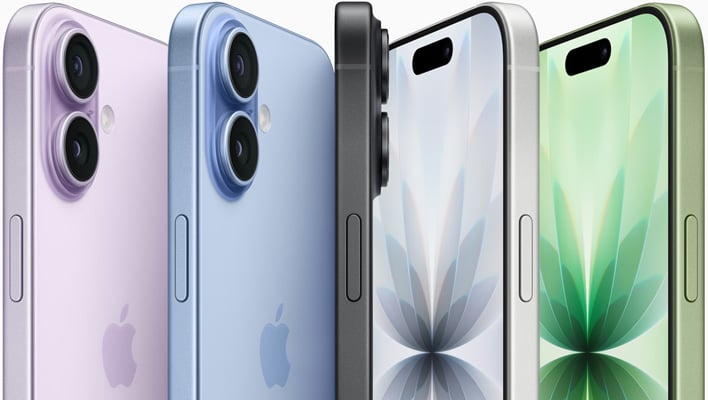
The iPhone ranks as Apple's top earner, outpacing all other categories combined by around $26.8 billion. The difference in sales jumps to $56.8 billion if focusing just on hardware and remove Services from the equation.
Looking ahead, part of the challenge Apple faces in keeping the record-setting momentum going is dealing with an industry-wide shortage of memory chips, which are crucial components in the iPhone, Mac, and iPad.
"We are working with Micron, which broke ground on a new advanced chip packaging and test facility, and we continue to advance the development of an end-to-end silicon supply chain across the country, sourcing 20 billion US chips in 2025," Cook said.
He caveated those remarks by saying Apple is in a "supply chase mode to meet the very high levels of customer demand" for the iPhone specifically, and acknowledged that Apple is "currently constrained." He also noted that it's difficult to predict when supply and demand will balance out in the current landscape.
While Apple was able to weather the storm to close out 2025 with memory having a "minimal impact" on its results, Cook said he anticipates a bigger impact on Q2's gross margin.
"You know, we do not obviously provide outlooks beyond the current quarter. Beyond Q2, but we do continue to see market pricing for memory increasing significantly. As always, we will look at a range of options to deal with that," Cook added.
It's not clear what those options are, but from the outside looking in, they could amount to price increases being passed on to the consumer and/or adjusting the base RAM and storage options on future generation iPhone models. The only specific Cook would offer when pressed to clarify is that "there are different levers that we can push."
In theory, Apple certainly has room to absorb some of the cost increases, particularly with net income (profit) for the quarter topping $42 billion, compared to $36.3 billion a year ago. However, in practice, Apple has to answer to its investors and they're going to want to see future earnings build on the momentum of Apple's Q1 performance.




