



Apple Could Challenge NVIDIA With A Monster M7 Ultra Chip With 1.5TB Of Memory


The report says that Apple began the tape-out process for the M7 a mere six months after doing the same for the M6. Under this accelerated timeline, the base M7 is expected as early as the first half of next year, with the Pro and Max following at the end of the year, finally culminating in the M7 Ultra in 2028. At the top of that stack, the M7 Ultra is being designed to support a staggering 1.5 terabytes of unified memory. That's roughly double the capacity reportedly planned for the upcoming M5 Ultra, though who knows what will actually be available given the RAMpocalypse.
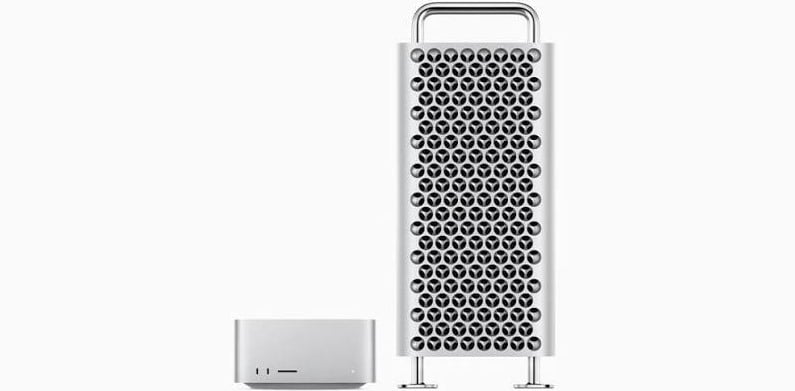
Apple is supposedly leaning so hard into this architecture that engineers are already developing a new AI server chip based on the M7 Ultra for a 2029 launch, which will follow a planned M5 Ultra server apparently code-named J246. The report also claims that Apple is preparing 1.4-nanometer M8 chips (code-named Soko) alongside other high-end Mac chips under the name Cardinal.
If a 1.5 TB memory pool sounds absurd for a desktop Mac, it's because this isn't about traditional computing. Bloomberg reports the M7 Ultra will drastically upgrade Apple Silicon's AI performance, bringing it closer to the class of dedicated AI accelerators like Nvidia's Blackwell. Running massive, frontier-level Large Language Models (LLMs) requires an exorbitant amount of VRAM just to load the model weights.
Apple Silicon has become the darling of the grassroots AI community as the budget-friendly Mac Mini has practically become the default always-on server for running tools like OpenClaw. There's no inherent hardware magic in the Mac Mini that makes it specifically "better" for OpenClaw; it's mostly just that it's the platform the creator originally built the agentic framework for, which resulted in dead-simple install scripts. It's about as close to an affordable, turn-key solution as could exist for something like this, though.
Now, in Bloomberg's reporting, the premise is that Apple's canceled $10 billion self-driving car project, which aimed for Level 5 autonomy, necessitated the creation of custom silicon and machine learning breakthroughs. The report argues this effort "gave rise to its Neural Engine, the dedicated portion of Apple's chips responsible for on-device AI processing," and claims this specific technology is what "helped turn the Mac into one of the strongest platforms for running AI locally". It makes for a great redemption story, but it's also completely off the mark.
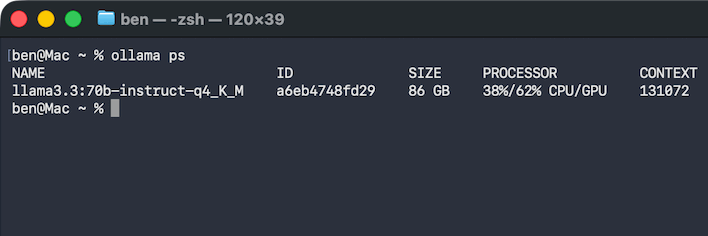
Actually running local AI on a Mac usually has virtually nothing to do with Apple's Neural Engine. You can see this for yourself; if you fire up an LLM using local engines like Ollama, LM Studio, or Apple's own MLX framework, you can watch the Mac's GPU crank all the way up to 100% at times while the Neural Engine sits at a dead-flat 0%. It's the GPU in the M-series chips doing the AI math, not the Neural Engine.
That's not to say Apple's Neural Engine is useless, but it's a largely fixed-function accelerator. It's fantastic for low-power, background tasks like FaceID, blurring your webcam background, or powering basic on-device writing tools, but it's fundamentally the wrong shape for the dynamic, autoregressive math required to run a heavy LLM or a local coding agent.
Apple isn't successfully courting AI developers because a canceled car project gave the firm a background NPU. Apple is courting AI developers because it built an efficient, high-capacity VRAM pool. If the M7 Ultra actually ships with 1.5 TB of memory, Apple won't just be courting those developers; it'll be leapfrogging NVIDIA and AMD's development platforms. Of course, 2028 is a long ways away, and who knows what wonders the Red, Green, and Blue teams will reveal between now and then?





