



Surprise! Android Can Finally AirDrop To iPhone For Easy File Sharing


For many, this update is a big deal, although this immediate feature rollout is limited to the freshly-minted Pixel 10 family (for now anyway). Still, this represents one of the most significant wins for consumer interoperability. Up until now, sharing a photo, video, or file between an iPhone and an Android device required users to rely on sharing links through emails or text messages—they worked, but let's be real, the process wasn't quick and glamorous. Apple’s insistence on keeping AirDrop, its high-speed, local file transfer protocol, proprietary ensured seamless sharing was locked into the iOS/macOS ecosystem.
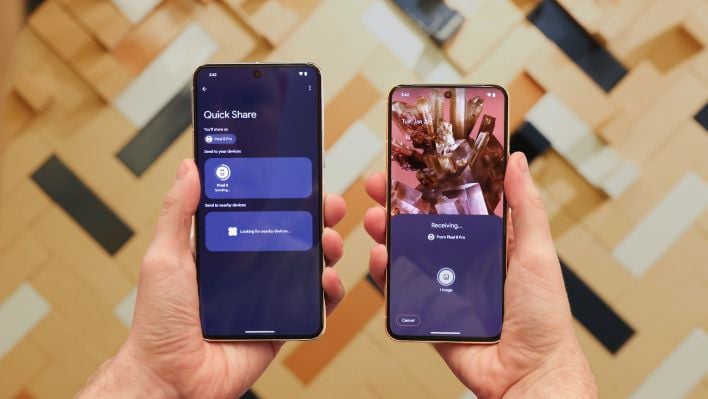
Finally however, Google has announced that Quick Share (successor to Nearby Share) can now handshake with AirDrop, allowing both sides of the wall to talk to each other.
The credit for this digital détente actually doesn't belong to Mountain View, but the regulatory muscle from overseas. While Google quickly leveraged the opportunity, the key that unlocked Apple’s system was forged in Brussels. The European Union, in its ambitious push for open standards and fair competition (likely stemming from sweeping legislation like the Digital Markets Act) mandated that platform gatekeepers adopt certain standardized communication protocols, particularly concerning Wi-Fi Direct or P2P networking. By forcing Apple to align the underlying hardware and software signals used by AirDrop with industry-recognized standards, the EU inadvertently created a back door into what was once a completely closed system.
Google’s engineering team swiftly moved to capitalize, refining Quick Share to recognize and communicate over the now-standardized AirDrop signals. The team didn't crack the AirDrop encryption; rather, it learned to speak the standardized Wi-Fi language Apple was required to use for device discovery and connection, building a nonetheless secure bridge between the two platforms.
According to Google's announcement, regardless of which is the receiving operating system, users of that device first need to head to their settings to make the device discoverable to all. Once that's done, Pixel 10 owners can see and send content to the Apple device, and vice versa. For further instructions, check out Google's support document on the topic.





