



AMD Radeon RX 9050 XT Rumored for 8GB VRAM and Surprise Core Count for Entry-Level Gaming


AMD is getting ready to expand its Radeon RX 9000 series GPU lineup with another entry-level model, the Radeon RX 9050, according to a new leak. If the information is accurate and AMD's plans don't change, the upcoming part will pair 8GB of GDDR6 memory with the same Navi 44 GPU as found in the Radeon RX 9060 XT, just with slower clocks.
The rumor comes from Videocardz, which posted a screenshot of a specifications table that allegedly originates with one of AMD's add-in board partners. Some of the key specifications for the unannounced Radeon RX 9050 include...
- Stream Processors: 2,048
- Video Memory: 8GB GDDR6
- Memory Speed: 18.0 Gbps
- Memory Interface: 128-bit
Part of what is interesting here is that the number of stream processors is identical to the Radeon RX 9060 XT, which AMD offers in both 8GB ($299 MSRP) and 16GB ($349) trim.
Meanwhile, the regular Radeon RX 9060 (non-XT) also features 8GB of GDDR6 memory at the same 18 Gbps speed with the same 128-bit bus width as the rumored Radeon RX 9050, but has fewer stream processors at 1,792.
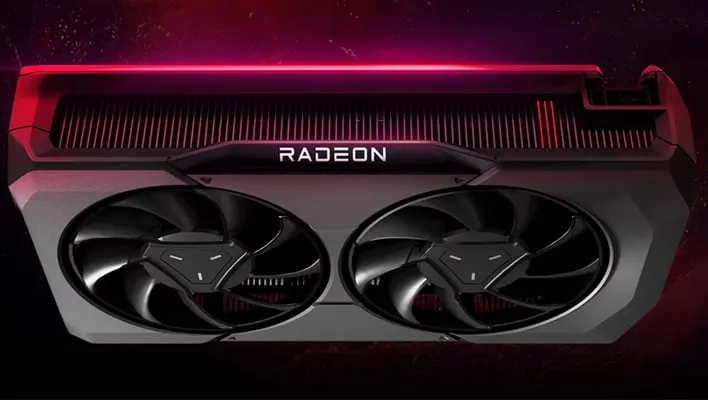
The clock speeds are the other interesting part. Here's how the three cards compare...
- Radeon RX 9060 XT: 1,700MHz base clock, 2,530MHz game clock, 3,130 boost clock
- Radeon RX 9060: 1,700MHz base clock, 2,400MHz game clock, 2,990MHz boost clock
- Radeon RX 9050: ??? base clock, 1,920MHz game clock, 2,600MHz boost clock
So if the leaked configuration is correct and remains unchanged between now and launch, the Radeon RX 9050 will feature more stream processors and faster memory chips compared to the Radeon RX 9060, which is an OEM-only part, and lower clock speeds, though there is no mention of the base clock.
As listed, the game clock for the Radeon RX 9050 is 20% lower than the Radeon RX 9060 and 24.1% lower than the Radeon RX 9060 XT, while the boost clock is 13% and 16.9% lower, respectively.
It will be interesting to see where pricing lands, if and when a Radeon RX 9050 ends up being released. We'll also be curious to see if it's another OEM-only part or made more broadly available, and what kind of overclocking headroom might exist.




