



AMD FSR Leak: New 8x Frame Gen And Ray Regeneration To Rival DLSS


Within AMD’s latest Adrenalin graphics driver code lies almost certain clues that the company is quietly developing an aggressive counterstrike to NVIDIA’s AI graphics lead: in particular, an experimental FidelityFX Super Resolution (FSR) update capable of pushing multi-frame generation up to an unprecedented 8x multiplier.

The discovery surfaced on the Chinese enthusiast forum Chiphell, where a user named Mouse uncovered the hidden settings using RadeonTuner (the popular open-source app used to tweak Radeon GPUs without navigating the standard Adrenalin interface). Within the app's global registry for a Radeon RX 9070 XT, the driver profile source code contained "MfgOverride" and "MfgRatio" parameters. And in the frame generation ratios drop-down, there was an option to select up to 8x FSR.
In mathematical terms, an 8x multiplier implies 7 AI-generated frames are interpolated for every 1 native frame.. A game running at a modest baseline of 60 fps could hypothetically scale to 480 fps, aligning with the industry's odd new obsession with ultra-high-refresh-rate gaming monitors.
While testing the RX 9070 XT across frequently-updated titles like Forza Horizon 6, Pragmata, Resident Evil 9, Crimson Desert, and Death Stranding 2, users found the feature not functioning. RadeonTuner’s developer, a.k.a. 'Dumbie', stepped in to clarify the situation on GitHub, explaining that AMD frequently injects feature strings and placeholders into driver profiles months before the actual ML models or underlying runtime code are ready. The driver possesses the architecture to recognize the commands, but lacks the executive payload to run them.
The leaked driver data exposes two other components to AMD's next-gen rendering strategy: overrides for an FSR Ray Regeneration Denoiser and an FSR Neural Radiance Caching system. Currently, technologies like ray reconstruction and neural caching are scarce, locked behind native implementation in just a select few blockbusters. By embedding global driver-level overrides for these features, AMD appears to be prepping a way to let gamers forcibly inject advanced AI denoising and lighting fixes into any game, regardless of whether the developers officially integrated the tools.
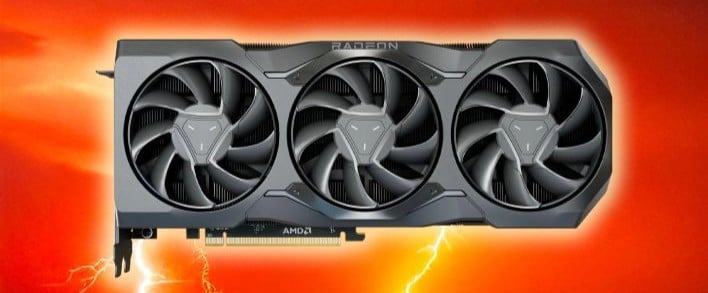
If any of these are true, it could be a big deal for AMD. Competitors have already moved beyond basic frame generation; NVIDIA’s DLSS ecosystem currently tops out at a 6x multi-frame generation, while Intel’s XeSS 3 features a 4x setting. Yet, massive hurdles remain for AMD's potential leapfrog attempt. Pushing eight times the frames introduces greater latency penalties and ghosting. Because current Radeon GPUs rely heavily on software pacing rather than hardware-based flip metering to smooth out frame delivery, experts expect this 8x push will require an overhaul of AMD’s Anti-Lag technology to ensure that a hypothetical 480 FPS output actually feels responsive to the player.





