



AI‑Generated Music Surges to 44% of New Uploads on Deezer


Deezer has revealed that 44% of the 170,000 tracks delivered to the service every day are generated by artificial intelligence, a staggering volume that not only shows growing user acceptance for the content, but also threatens to drown out human artists in the process.
Amounting to roughly 75,000 AI tracks daily, this surge represents a massive escalation from just a year ago, when synthetic uploads was just a fringe thing. Yet, breaking that number down a little more, Deezer’s internal analysis indicates that the vast majority of these tracks are not by musicians, but rather tools for streaming fraud. According to the company, up to 85% of fully-AI content streams are detected as fraudulent, orchestrated by bots designed to game the system and siphon royalties away from the pool intended for human creators.
To combat this, the French streaming giant has deployed a proprietary detection system that identifies and tags synthetic audio. Tracks flagged as fraudulent are scrubbed from editorial playlists and algorithmic recommendations, ensuring they do not appear in a user’s Flow or discovery mixes. Some experts estimate that without intervention, streaming fraud could dilute royalty payments to legitimate artists by billions of dollars over the next several years.
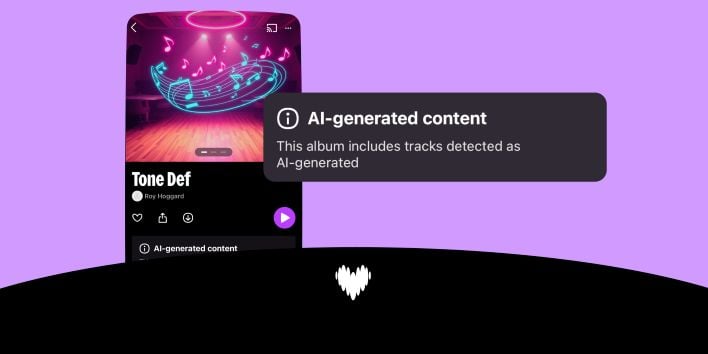
Despite the abundance of AI content, current listener behavior shows that it has yet to find a genuine audience; AI tracks currently account for only 1-3% of total streams on Deezer. That being said, a recent study commissioned by the platform found that 97% of listeners could not distinguish between AI-generated and human-made music in blind tests. Also, the results showed that 80% agreed that fully AI-generated content should be properly labeled, whereas 52% of the respondents agreed that fully AI-generated music should NOT be include in charts alongside human-made songs.
On a broader scope, AI content remains a hotly-debated topic among tech and creative communities, especially regarding the definition of authorship. As AI tools become more integrated into the standard production workflow, the line between a human-led project and a fully automated one continues to blur.
So far, most major streaming platforms, such as Spotify, Tidal, and YouTube Music, allow uploading of fully AI-generated music, although each have their own tools and strategies to prevent spamming or royalty issues.





