



Adata Chairman Warns Memory Crisis Is Way Worse Than You Think


There is conflicting information on precisely how long the memory crunch will last, and it's obviously a point of interest considering how the chip shortage is affecting prices of not just PC RAM, but consoles like the Switch 2 (due for a price hike in September), Valve's Steam Machine, and practically anything else with a memory and/or storage chip inside. While outlooks differ, one of the more dire ones comes from Adata chairman Chen Li-bai, who says we shouldn't even think about discussing the AI bubble until 2030 at the earliest.
"After 2030, let's discuss whether the AI bubble will occur in 2040 or 2050," Li-bai told Commercial Times (via Google Translate).
It's possible that something got lost in translation, but the messaging at face value is that the memory crunch could persist for a decade or even two decades before the so-called AI bubble bursts, if it does at all.
Part of the reason for his forecast is that he believes AI applications will continue to expand into different business models, which in turn will create a persistent demand that struggles to keep up with supply. He also suggests that major memory makers like Samsung and SK hynix will be careful not to over-expand production in pursuit of meeting growing demand.
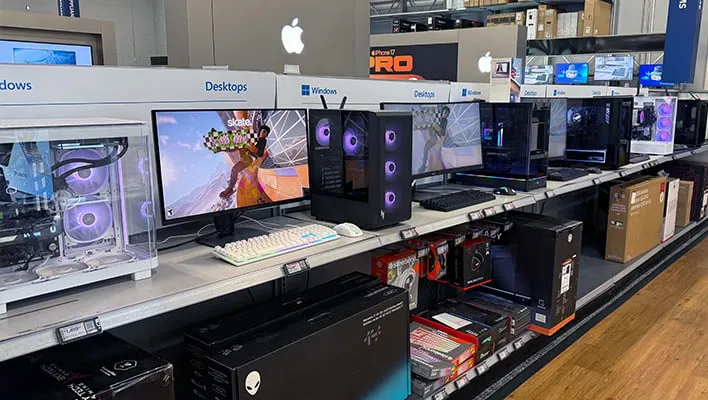
"Chen Li-bai said that under the constraints of supply expansion, there is no sufficient basis for the market to currently discuss that memory supply and demand are about to loosen," Commercial Times states.
According to the site, Li-bai anticipates that memory prices will continue to rise throughout the rest of 2026, and that looking ahead, there will be even more devices eating into demand beyond mainly the data center. He points to robotics, autonomous vehicles, smart homes, and low orbit satellites as some examples.
Li-bai added that even aggressive factory expansions by the industry's major memory producers (along with Chinese competitors) won't be enough to satisfy this level of demand over the next decade. As AI continues its migration out of traditional data centers and into the physical world, the ongoing memory shortage may no longer be a standard cyclical market fluctuation, but rather a long-term structural trend. Or will it?
If you're looking for a more encouraging outlook for consumers, TrendForce claims that NAND flash memory supply growth will outpace demand by 2027.
If you're looking for a more encouraging outlook for consumers, TrendForce claims that NAND flash memory supply growth will outpace demand by 2027.
"Looking towards 2027, server demand is anticipated to stay strong. However, ongoing process migrations by suppliers, steady growth in bit output, and persistent weak demand in consumer electronics are likely to gradually restore market balance," TrendForce says.
The market research firm appears more bullish on the effects that continued factory and output expansion will have on the market as a whole. Simply put, it optimistically forecasts that the supply-demand balance will turn positive in the second half of next year.




