



TSMC Reboots 1.4nm Chip Fab Plan As Local Resistance Evaporates


Taiwan Semiconductor Manufacturing Company (TSMC) has secured the groundwork for its 1.4-nanometer chipmaking hub expansion in Taiwan after local landowners underwent a dramatic, economically driven change of heart.
The breakthrough marks an unexpected turnaround for the Phase 3 expansion of the Longtan Science Park in Taoyuan that had forced the company to abandon those plans after facing intense public resistance in October 2023. Local residents, who held approximately 88% of the privately owned land targeted for state acquisition, formed self-help anti-expansion committees to protest displacement and environmental disruption. Facing persistent friction, the semiconductor giant withdrew, leaving the project stalled and the government scrambling to restructure its high-tech zoning strategy.
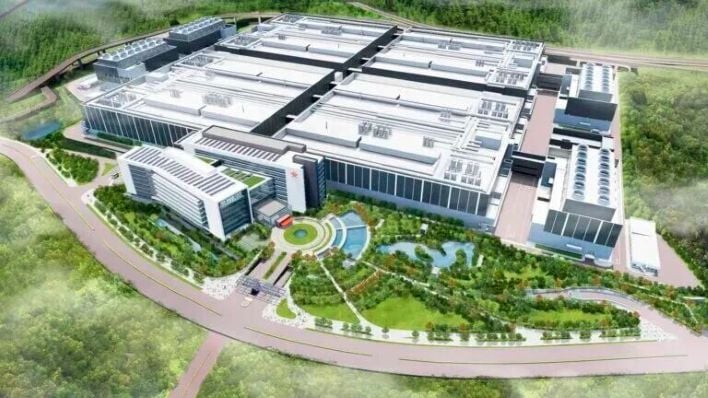
Following approval by the National Science and Technology Council, the revitalized Longtan site is slated to host two 1.4nm fabrication plants alongside an advanced panel-level packaging facility. The development sits at the center of an estimated $49 billion sub-2nm capital expenditure strategy designed to maintain TSMC’s manufacturing lead over global competitors. As TSMC scales its 2nm node toward a target capacity of 100,000 monthly wafers, pilot production for the 1.4nm process is projected to begin around late 2027 or 2028. Key clients like Apple are expected to anchor early production runs for future flagship processors, such as the A22 Pro.
With target land acquisitions set for completion by late 2029 and public infrastructure construction commencing in 2030, the Longtan expansion likely cements Taiwan’s position as the primary manufacturing baseline for next-gen silicon.





